Vaping: Free Market vs. Consumer Safety

Vaping products

On September 11, 2019, President Donald Trump told reporters that his administration was considering a ban on flavored vaping products.1 This announcement came after a sometimes-fatal, vaping-related illness began appearing across the United States. On November 18, the Trump administration seemed to reverse course under pressure from constituents2 and corporate donors,3 announcing that no new regulations would be put in place at this time.

Vaping is the use of electronic cigarettes (often stylized as e-cigarettes). E-cigarettes are battery-operated devices that heat a liquid into a vapor that is inhaled.4 E-cigarettes can contain an assortment of substances, including nicotine and THC (tetrahydrocannabinol, the active compound in marijuana). E-cigarettes can also come in various flavors that mimic candies, soft drinks, or fruits. The flavoring of e-cigarettes has sparked nationwide discourse about the free market and consumer safety principles.

Opponents of flavored e-cigarettes claim that such products add to the influx of adolescents becoming addicted to nicotine. Prior to the rise of e-cigarettes, the Centers for Disease Control and Prevention reported downward trends in tobacco consumption. However, “since 2014, e-cigarettes have been the most commonly used tobacco product among U.S. middle and high school students. Between 2017 and 2018 alone, the number of youth who used e-cigarettes went up by 1.5 million. In fact, the U.S. Surgeon General has called e-cigarette use by youth an ‘epidemic,’ and warned that it threatens decades of progress toward making sure fewer young people use tobacco.”5

Supporters, on the other hand, view e-cigarettes as a safer alternative to cigarettes—one that has helped many people break their addiction to smoked tobacco products. Proponents of flavored e-cigarettes believe that banning flavors would not discourage people from the risks of vaping; rather, it would make them turn to the black market, where they could come into contact with unregulated, potentially dangerous products.6 Advocates of flavored e-cigarettes also argue that over-regulation of flavored tobacco products would hurt small businesses. Americans for Tax Reform (ATR), a conservative advocacy group, noted, “Eliminating all but one or two of these options [of e-cigarette flavors] for adults would destroy thousands of small businesses, force many adult vapers to return to smoking, and force some to seek out products on the black market.”7

However, as a result of the vaping-related hospitalizations and deaths, state governments and some private businesses have begun implementing new restrictions. Juul Labs Inc., one of the largest e-cigarette providers in the United States, announced on October 17, that it would suspend sales of all non-tobacco- and non-menthol-based flavors of its e-cigarette products.8 As of October 28, the state governments of Michigan, New York, Rhode Island, and Washington have issued temporary bans on flavored vaping products, and other states are considering implementing bans. Massachusetts has instituted the most restrictive ban—a four-month ban on the sale of all vaping products, regardless of whether or not products are flavored.9

As the conversation about flavored e-cigarettes continues, individuals on both sides of the debate are taking a closer look at this social phenomenon and its impact on American society.

For further reading on e-cigarette bans, please see Close Up in Class’ Controversial Issue in the News on the subject.

Discussion Questions:

  1. How much have you heard about the addictiveness of nicotine and other stimulants?
  2. Should companies be allowed to knowingly cause addiction in consumers? Why or why not?
  3. Do you think vaping is a health crisis? Why or why not?
  4. Who should be responsible for managing the risks of using e-cigarettes: government or consumers?
  5. Is limiting access to flavors a legitimate way to discourage vaping? Why or why not?
  6. When do government regulations begin to encroach on individual liberties?


Sources

Featured Image Credit: Arnd Wiegmann/Reuters via theatlantic.com
[1] CNN: https://www.cnn.com/2019/09/11/politics/donald-trump-vape-e-cigarette-flavors/index.html
[2] Slate: https://slate.com/news-and-politics/2019/11/trump-reversal-flavored-e-cigarette-vape-ban.html
[3] New York Times: https://www.nytimes.com/2019/11/17/health/trump-vaping-ban.html
[4] National Institutes of Health: https://newsinhealth.nih.gov/2019/02/vaping-rises-among-teens
[5] Centers for Disease Control and Prevention: https://www.cdc.gov/tobacco/features/back-to-school/e-cigarettes-talk-to-youth-about-risks/index.html
[6] https://www.forbes.com/sites/paulhsieh/2019/09/30/dont-make-the-vaping-crisis-worse-with-hasty-new-regulations/#1fca1e53169f
[7] Forbes: https://thehill.com/policy/healthcare/464470-trump-takes-heat-from-right-over-vaping-crackdown
[8] NPR: https://www.npr.org/sections/health-shots/2019/10/17/771098368/juul-suspends-sales-of-flavored-vapes-and-signs-settlement-to-stop-marketing-to-
[9] Associated Press: https://www.cnbc.com/2019/09/27/washington-joins-other-states-in-flavored-vaping-ban.html#targetText=New%20York%2C%20Michigan%20and%20Rhode,vaping%20products%20%E2%80%94%20flavored%20or%20not.


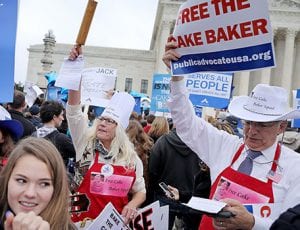
How the Supreme Court Could Reshape Discrimination Lawsuits

On November 13, 2019, the Supreme Court heard arguments in Comcast Corp. v. National Association of African American-Owned Media.1 The Court’s decision will determine how difficult it will be to bring future cases regarding possible discrimination and racial bias to trial.2
Facts of the Case

Byron Allen, an African American, owns Entertainment Studios Networks (ESN), which operates channels including JusticeCentral.TV and Pets.TV.3 Cable provider Comcast declined to carry ESN channels, citing capacity constraints and lack of demand.4 Allen alleges discrimination, claiming that Comcast offered untruthful excuses and added white-owned networks instead of his.5 Comcast calls the case frivolous, pointing out that a Carter-appointed district judge dismissed the case three times.6 The Supreme Court will decide if Allen’s case merits discovery and trial.7

Legal Arguments and Ramifications

Allen cites one of the first U.S. civil rights laws,8 the Reconstruction-era Civil Rights Act of 1866,9 which was intended to help former slaves overcome discriminatory “Black Codes” by guaranteeing them equal rights to make and enforce contracts.10 Allen calls it “an economic pathway for former slaves”11 that should ensure “equal access for economic opportunity for all Americans.”12

But does the law require Allen to prove that race was one motivating factor or the only factor in Comcast’s decision-making?13 Allen claims that the higher threshold would encode discrimination.14 The U.S. Chamber of Commerce asserts that the lower threshold would force businesses to settle costly nuisance suits15 rather than risk negative publicity and an onerous discovery process.16

Civil rights lawyers call17 the stricter test a “near-impossible”18 standard that would block victims’ suits19 and deter lawyers from taking their cases20 by precluding tactics like depositions.21 Drexel University law professor David S. Cohen summarizes, “Today very few people are openly racist, so they hide behind other reasons. A law that requires someone to say that race is the only reason for discrimination will be very hard to prove.”22

Comcast states that it isn’t advocating a major legal change,23 just a narrow ruling24 that won’t have far-reaching effects.25 Comcast touts its progressive diversity record26 in programming and in developing African-American ownership27 (which Allen disputes28). Comcast calls the discrimination allegations a “preposterous”29 business tactic.30

Political Involvement

The Department of Justice took Comcast’s side (despite President Trump’s derision of Comcast-owned channels),31 advocating the higher standard32 with 10 minutes of Comcast’s argument time.33 Some congressional Democrats have called for Comcast to be broken up,34 while others have joined some 2020 Democratic presidential candidates35 and over 20 civil rights organizations36 (including the NAACP37) in siding with Allen’s legal interpretation.

Some analysts see the conservative-leaning Supreme Court as unfriendly to civil rights plaintiffs38 and guarding of higher pleading standards.39 Though the justices appeared to favor Comcast during the hearing, Allen still expressed hope.40 The Supreme Court decision is expected in June 2020.

Suggested Further Reading

READ: Explanation of the “But-for” legal test that will decide this case (from Cornell Law School’s Legal Information Institute)

READ: Text of the Civil Rights Act of 1866 with historical context and study questions (from TeachingAmericanHistory.org, a project of the Ashbrook Center at Ashland University)

READ: Analysis of the hearing from SCOTUSblog’s Amy Howe

VIEW: What’s on the Supreme Court calendar?

Discussion Questions:

  1. Is it important to have diverse actors and characters on screen? Why or why not?
  2. Is it important to have diversity among writers, directors, and producers of shows and movies? Why or why not?
  3. Is it important to have diversity among owners of media companies? Why or why not?
  4. Is the Civil Rights Act of 1866 still relevant over 150 years later? Why or why not?
  5. In a discrimination trial, should Allen win if he can prove that Comcast was partially motivated by racial bias, or should he have to prove that bias is the only reason Comcast didn’t do business with him?
  6. Respond to this quote from Allen’s lawyer (in a Washington Post article): “Imagine somebody goes to a hotel to rent a room and the clerk says, ‘We’re not renting a room to you because we don’t have rooms available and we don’t rent rooms to black people,’” said Erwin Chemerinsky, dean of University of California’s Berkeley School of Law, who will argue on Allen’s behalf. “Under Comcast’s theory, that wouldn’t be enough to prove discrimination.”
  7. The Ninth Circuit Court of Appeals thinks that if Comcast is partially motivated by racial bias, it doesn’t matter if the company also has legitimate business reasons not to carry Allen’s channels. The Ninth Circuit says that Allen should get a chance to gather more evidence by looking at Comcast documents and interviewing their employees, and then there should be a trial. Do you agree or disagree with the Ninth Circuit? Why?


Sources

Featured Image Credit: Steve Helber, Associated Press, via https://images.wsj.net/im-123817?width=1260&size=1.5 
[1] Oyez Project: https://www.oyez.org/cases/2019/18-1171
[2] CNN: https://www.cnn.com/2019/06/10/politics/supreme-court-race-discrimination-comcast/index.html
[3] Reuters: https://www.reuters.com/article/us-usa-court-comcast/supreme-court-to-hear-comcast-appeal-in-byron-allen-racial-bias-suit-idUSKCN1TB1QR
[4] Ibid.
[5] Ibid.
[6] Fox Business: https://www.foxbusiness.com/money/byron-allen-case-supreme-court-civil-rights
[7] The Hollywood Reporter: https://www.hollywoodreporter.com/thr-esq/byron-allen-v-comcast-supreme-court-race-case-could-reshape-bias-lawsuits-1245950
[8] U.S. House of Representatives History, Art, and Archives: https://history.house.gov/Historical-Highlights/1851-1900/The-Civil-Rights-Bill-of-1866/
[9] Federal Judicial Center: https://www.fjc.gov/history/timeline/civil-rights-act-1866
[10] The Hollywood Reporter: https://www.hollywoodreporter.com/thr-esq/byron-allen-v-comcast-supreme-court-race-case-could-reshape-bias-lawsuits-1245950
[11] American Bar Association ABA Journal: http://www.abajournal.com/web/article/scotus-considers-whether-comcast-discriminated-against-entertainment-mogul-in-denying-cable-tv-slots
[12] Yahoo: https://finance.yahoo.com/news/byron-allen-comcast-supreme-court-case-135904187.html
[13] Associated Press: https://apnews.com/c2f708547aa04b65b68ecf571a0236b1
[14] NewsOne: https://newsone.com/3891953/everything-to-know-about-bryon-allens-20-billion-racial-discrimination-lawsuit-against-comcast/
[15] Philadelphia Inquirer: https://www.inquirer.com/business/trump-comcast-civil-rights-byron-allen-race-hollywood-cable-20190907.html
[16] The Hollywood Reporter: https://www.hollywoodreporter.com/thr-esq/byron-allen-v-comcast-supreme-court-race-case-could-reshape-bias-lawsuits-1245950
[17] Washington Post: https://www.washingtonpost.com/business/2019/11/13/race-discrimination-standards-hang-balance-supreme-court-takes-up-comcast-suit/
[18] Deadline: https://deadline.com/2019/09/comcast-naacp-supreme-court-discrimination-battle-byron-allen-urban-league-1202747067/
[19] Philadelphia Inquirer: https://www.inquirer.com/business/comcast/comcast-byron-allen-lawsuit-naacp-civil-rights-laws-20191002.html
[20] The Hollywood Reporter: https://www.hollywoodreporter.com/thr-esq/byron-allen-v-comcast-supreme-court-race-case-could-reshape-bias-lawsuits-1245950
[21] Philadelphia Inquirer: https://www.inquirer.com/business/trump-comcast-civil-rights-byron-allen-race-hollywood-cable-20190907.html
[22] Ibid.
[23] Ibid.
[24] Deadline: https://deadline.com/2019/09/comcast-naacp-supreme-court-discrimination-battle-byron-allen-urban-league-1202747067/
[25] The Hill: https://thehill.com/regulation/court-battles/447704-supreme-court-to-hear-racial-discrimination-case-against-comcast
[26] Ibid.
[27] Deadline: https://deadline.com/2019/11/comcast-breakup-threat-congressman-letter-byron-allen-lawsuit-1202781178/
[28] The Hill: https://thehill.com/regulation/court-battles/447704-supreme-court-to-hear-racial-discrimination-case-against-comcast
[29] Associated Press: https://apnews.com/c2f708547aa04b65b68ecf571a0236b1
[30] Yahoo: https://finance.yahoo.com/news/byron-allen-comcast-supreme-court-case-135904187.html
[31] Philadelphia Inquirer: https://www.inquirer.com/business/trump-comcast-civil-rights-byron-allen-race-hollywood-cable-20190907.html
[32] Deadline: https://deadline.com/2019/08/byron-allen-comcast-civil-rights-lawsuit-supreme-court-filing-reaction-doj-donald-trump-1202671369/
[33] Deadline: https://deadline.com/2019/11/comcast-breakup-threat-congressman-letter-byron-allen-lawsuit-1202781178/
[34] Bloomberg: https://www.bloomberg.com/news/articles/2019-11-11/comcast-faces-call-for-breakup-in-legal-fight-with-byron-allen
[35] Deadline: https://deadline.com/2019/10/kamala-harris-cory-booker-civil-rights-donald-trump-comcast-lawsuit-byron-allen-supreme-cout-1202751831/
[36] Philadelphia Inquirer: https://www.inquirer.com/business/comcast/comcast-byron-allen-lawsuit-naacp-civil-rights-laws-20191002.html
[37] NAACP: https://www.naacp.org/latest/naacp-statement-comcast-corporations-partnership-trump-administration-eviscerate-civil-rights-protections/
[38] Philadelphia Inquirer: https://www.inquirer.com/business/trump-comcast-civil-rights-byron-allen-race-hollywood-cable-20190907.html
[39] The Hollywood Reporter: https://www.hollywoodreporter.com/thr-esq/byron-allen-v-comcast-supreme-court-race-case-could-reshape-bias-lawsuits-1245950
[40] CNBC: https://www.cnbc.com/2019/11/13/comcast-poised-to-beat-20-billion-discrimination-case-at-supreme-court.html


The Supreme Court Will Address DACA. What Will Follow?

On November 12, 2019, the Supreme Court will hear arguments about the Trump administration’s efforts to end the immigration policy known as Deferred Action for Childhood Arrivals (DACA). The status of DACA recipients has been in limbo for over two years amidst administration actions and court injunctions.
What Is DACA?

After Congress failed in its attempts to pass a bill dealing with undocumented immigrant minors,1 then-President Obama created DACA in the run-up to his reelection campaign in 2012.2 The program deferred deportation for undocumented individuals who arrived in “the U.S. before their 16th birthday, were under age 31, had continuously resided in the United States since June 15, 2007,”3 had not committed serious crimes, and met educational or military service requirements.4 Considered a temporary fix awaiting congressional immigration reform, DACA allowed for infinite renewals of two-year deferrals.5

How Did DACA Reach the Supreme Court?

The Trump administration decided not to defend DACA in a possible court case,6 arguing that the Obama administration lacked the authority to establish the policy—a claim that opponents characterized as a misread of the law, open to judicial review.7 These opponents assert that the policy change did not meet federal standards and that the Trump administration violated due process and “the Equal Protection Clause because it was motivated by discriminatory animus.”8 Lower courts agreed and left the law temporarily in place.9 After repeated requests, the Supreme Court agreed to weigh in.10

The Supreme Court must decide if courts can review the policy change and if the Department of Homeland Security (DHS) made the change lawfully.11 The administration argues that their agencies have the necessary discretion (so courts cannot intervene) and that their legitimate rationale included doubts about DACA’s legality12 absent congressional authorization.13 DHS also claims that DACA encourages further illegal immigration, because it undercuts the “ability to send ‘a message that leaves no doubt regarding the clear, consistent and transparent enforcement of the immigration laws.’”14

Where Does DACA Stand Now?

Currently, DHS is not accepting new DACA applications, but it is continuing to process renewals.15 As of June 2019, there were approximately 660,880 active DACA recipients.16

What’s Next for DACA?

DACA activists have begun a 230-mile march from New York City to the Supreme Court,17 highlighting the significant personal stakes they want the Court to consider.18 Their allies cite DACA’s high polling approval,19 economic benefits,20 and support from an array of large businesses.21 Their opponents argue that the executive order is an executive overreach,22 and they want a legislative compromise that includes increased border security and limits to further immigration.23 President Trump has hinted at a possible deal,24 depending on the Court hearing. The justices’ decision will likely come in June 2020.

VIEW: What’s on the Supreme Court calendar?

READ: Legal analysis of the DACA case on SCOTUSblog

For further reading on DACA, please see Close Up in Class’ Controversial Issue in the News on the subject.

Discussion Questions:

  1. How present are recent immigrants in your school and community?
  2. Do you think the DACA policy encourages other immigrants to enter the United States illegally?
  3. Should DACA limit the number of deferrals that recipients can access? Should recipients be able to achieve lawful permanent resident or citizen status?
  4. Should the fate of DACA be determined on its own, or should it be part of a larger set of immigration reforms? If the latter, what reforms are necessary?
  5. Should a president be able to bypass Congress with an executive order to establish an immigration program like DACA, or is that an overreach (an abuse of power)?
Sources
Featured Image Credit: Brendan Smialowski/AFP/Getty Images, via https://www.vox.com/identities/2019/10/28/20909969/daca-workers-dreamers-supreme-court
[1] American Immigration Council: https://www.americanimmigrationcouncil.org/research/dream-act-daca-and-other-policies-designed-protect-dreamers
[2] NBC News: https://www.nbcnews.com/storyline/smart-facts/what-daca-n854906
[3] Department of Homeland Security: https://www.dhs.gov/deferred-action-childhood-arrivals-daca
[4] Ibid.
[5] NBC News: https://www.nbcnews.com/storyline/smart-facts/what-daca-n854906
[6] PBS NewsHour: https://www.pbs.org/newshour/nation/trumps-decision-end-daca-explained
[7] Oyez: https://www.oyez.org/cases/2019/18-587
[8] Ibid.
[9] Reuters: https://www.reuters.com/article/us-usa-immigration-daca/second-u-s-appeals-court-rules-trump-cannot-end-protections-for-dreamers-idUSKCN1SN1VN
[10] NBC News: https://www.nbcnews.com/politics/supreme-court/supreme-court-agrees-hear-daca-case-win-trump-administration-n1020481
[11] Oyez: https://www.oyez.org/cases/2019/18-587
[12] CNN: https://www.cnn.com/2019/08/20/politics/justice-department-deferred-action-for-childhood-arrivals-supreme-court/index.html
[13] NBC News: https://www.nbcnews.com/politics/supreme-court/supreme-court-agrees-hear-daca-case-win-trump-administration-n1020481
[14] Ibid.
[15] Department of Homeland Security: https://www.dhs.gov/deferred-action-childhood-arrivals-daca
[16] U.S. Citizenship and Immigration Services: https://www.uscis.gov/sites/default/files/USCIS/Resources/Reports%20and%20Studies/Immigration%20Forms%20Data/Static_files/DACA_Population_Receipts_since_Injunction_Jun_30_2019.pdf
[17] New York Daily News: https://www.nydailynews.com/new-york/ny-daca-dreamers-supreme-court-nyc-dc-make-the-road-immigration-20191022-7cj63amqnnhvhjfwyctyq52sum-story.html
[18] Vox: https://www.vox.com/identities/2019/10/28/20909969/daca-workers-dreamers-supreme-court
[19] Washington Post: https://www.washingtonpost.com/politics/survey-finds-strong-support-for-dreamers/2017/09/24/df3c885c-a16f-11e7-b14f-f41773cd5a14_story.html
[20] PBS NewsHour: https://www.pbs.org/newshour/economy/making-sense/4-myths-about-how-immigrants-affect-the-u-s-economy
[21] CNBC: https://www.cnbc.com/2019/10/04/major-companies-tell-supreme-court-ending-daca-will-hurt-the-economy.html
[22] Fox News: https://www.foxnews.com/opinion/its-time-to-end-daca-its-unconstitutional-unless-approved-by-congress
[23] Fortune: https://fortune.com/2018/01/25/trump-daca-citizenship/
[24] Washington Post: https://www.washingtonpost.com/politics/trump-suggests-hes-open-to-daca-legislation-if-he-prevails-in-supreme-court-case/2019/09/06/94d0295e-d093-11e9-87fa-8501a456c003_story.html


Using the Harkness Method to Teach the News

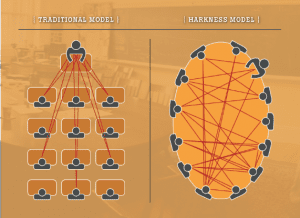
Harkness Model versus Traditional Model DiagramA Brief Introduction to The Harkness Method1

The Harkness method is a type of student discussion created at the Phillips Exeter Academy in 1930. At the time, most methods of education involved teacher-led lectures and rote memorization. But a wealthy philanthropist, Edward Harkness, promised a financial contribution of over $5 million (or almost $90 million in 2019 dollars2) to the school—if it adopted a revolutionary method of student-directed teaching in a “conference-like” atmosphere.3

“What I have in mind is [a classroom] where [students] could sit around a table with a teacher who would talk with them, and instruct them by a sort of tutorial or conference method, where [each student] would feel encouraged to speak up,” Harkness said of the school he envisioned. “This would be a real revolution in methods.” To bring this idea to life, the school used a portion of the money to change the classroom environment to suit student-centered instruction. Desks in rows became round tables, and class sizes of 25 to 35 were reduced to 12. Eventually, the now-signature Harkness table became oval, allowing the instructor to see and make eye contact with every student. The idea is that all people at the table are equal and, in the words of Harkness, “there are no corners to hide behind.”4

Exeter still uses the Harkness method in teaching today, in every subject. “What happens at the table is, as Harkness described it, ‘real revolution,’” the school notes. “It’s where you explore ideas as a group, developing the courage to speak, the compassion to listen, and the empathy to understand. It’s not about being right or wrong. It’s a collaborative approach to problem-solving and learning.”5 Exeter also offers an institute each year, bringing together more than 400 teachers to learn about implementing the method in their classrooms.6

Overview of the Harkness Method

In a traditional Harkness method discussion, 12 students sit at an oval table with a teacher acting as the facilitator. The primary goal of the method is to place students in the driver’s seat of their learning and to make learning a more participatory process. To achieve this, students come to the table having read a piece of material as background (e.g. a primary source, a news article on a current event, or a piece of literature). They actively participate in a discussion about the content while the facilitator monitors.

On the surface, this may seem like the Socratic method, but there is a significant difference. In the Harkness method, the teacher must give up the need to “guide” students to the “right” solution and instead be an active participant in the discussion.7 A sign of a high-quality Harkness discussion would be one that requires little to no direction by the teacher; instead, the learning occurs student-to-student. During the discussion, the teacher uses various discussion tracking tools to monitor students’ participation and dialogue and to ensure that participants are following norms and staying on topic. They can track everything, including who has spoken, amount of speaking time, and body language, to see the quality of conversation and monitor student gains.

Using this Method to Teach the News

While most schools have much larger class sizes than 12 and rarely have large oval tables, you can make modifications to employ this method. For example, Chicago teacher Aida Conroy was able to implement the method in a class of 33 and saw tremendous gains in college-readiness test scores that surpassed the standard “college-ready” score.8

Suggested Steps for Employing this Method in a Modern Classroom  

  • Before actually using the method, you will need to introduce students to the Harkness method and give (or have students create) expectations/table norms.
    1. Some examples of table norms include looking at the person speaking, staying engaged, and asking clarifying questions.
    2. You should give students examples of what active participation looks like in a Harkness discussion (e.g. ask a question, present evidence from the text). These norms and participation guidelines could be a form you distribute or a poster in the room. Find more examples here.
  • Assign students an article (or two) on a current event or a historically controversial issue that you would like students to explore. Assigning the article(s) as homework would give students time to digest and come prepared with notes, talking points, questions, and ideas.
  • Place chairs or desks in an oval shape (as an oval table is likely unavailable), ensuring eye contact between all students. Invite students to join you in this Harkness discussion and remind them of the expectations and goals of the conversation.
  • Using a version of the Harkness table discussion tracking system, have students begin discussion of the background information they read. The first several times you do this, students will likely need more hands-on facilitation and reminders about expectations at the table. Again, these expectations can be unique to the specific class or those you introduced earlier.
  • Once the class is accustomed to this model, it could be possible to teach students to act as facilitators (and to use some basic table tracking tools). This allows smaller groups to discuss while the teacher floats to monitor, clarify, and observe student learning.
  • To more closely approximate the small class size of the Harkness method, consider placing students in pairs and designating each member of the pair as an A or B. Then, have a first-round discussion with all As participating while the Bs track their partners’ participation. After 15 to 20 minutes, switch roles.

 Resources and More Information

  • Download Exeter’s free Harkness Toolkit pieces here
  • Read essays by educators who have used the Harkness model here
  • The Concise EHI Experience Guide to Harkness, created by a teacher who attended the Exeter Institute, can be found here
Sources
Featured Image Credit: Upland Country Day School
[1] Phillips Exeter Academy: https://www.exeter.edu/exeter-difference/how-youll-learn
[2] CPI Inflation Calculator: http://www.in2013dollars.com/us/inflation/1930?amount=5840000
[3] Boarding School Reviewhttps://www.boardingschoolreview.com/blog/to-harkness-or-not-to-harkness
[4] Business Insider: https://www.businessinsider.com/phillips-exeter-harkness-table-2014-11
[5] Phillips Exeter Academy: https://www.exeter.edu/exeter-difference/how-youll-learn
[6] Phillips Exeter Academy: https://www.exeter.edu/programs-educators
[7] University of Bedfordshire: https://www.beds.ac.uk/jpd/volume-4-issue-3/harkness-learning-principles-of-a-radical-american-pedagogy/
[8] Boarding School Review: https://www.boardingschoolreview.com/blog/to-harkness-or-not-to-harkness


President Trump Seeks to Further Reduce U.S. Military Presence in Syria

American soldier faces ISIS fighters in SyriaOn October 6, 2019, President Trump made the surprising announcement that he would pull out most of the 1,000 U.S. troops in Syria, where the United States has been working with the Kurdish-led Syrian Democratic Force (SDF) to fight the Islamic State of Iraq and Syria (ISIS), al-Qaeda, and Syrian President Bashar al-Assad, and to repel Russian and Iranian influence in the region. Apparently, this announcement was made without the knowledge of most of President Trump’s cabinet, including the State Department.1

The Syrian civil war erupted in 2011, when government forces violently suppressed protesters who were calling for Assad to step down. The conflict has been deadly and devastating, resulting in six million Syrian refugees and another six million citizens internally displaced (out of a population of around 18 million people).2 The war has allowed for extremist groups, including ISIS, to gain power in the region; since 2014, the United States has partnered with the SDF to fight extremists and Assad’s forces.

However, Turkey—a NATO ally that is also fighting against Assad—has long considered the Kurds on their border to be a threat and have promised strikes against them in the last few months.3 The Kurds have benefited greatly from the partnership with the United States, which has allowed the formerly oppressed minority group to establish Kurdish schools and set policies that represent their interests.

Removing U.S. troops would allow Turkish forces to control the area in northeastern Syria along the Turkish and Iranian border, which is currently held by U.S. and SDF forces. Turkey presently claims that its goals include removing Kurdish forces from the area and resettling Syrian refugees along the border.

Throughout the week of October 6, U.S. troops have pulled back from the Turkish border. Increased violence in the region began almost immediately after President Trump’s announcement, and on October 9, the Turkish military fired shots in Syria. In response, the Kurdish authorities stated, “We call upon our people, of all ethnic groups, to move toward areas close to the border with Turkey to carry out acts of resistance.”4 ISIS suicide bombers have also attacked Kurdish positions in the Syrian city of Raqqa.5

President Trump’s withdrawal announcement met backlash from both Democrats and Republicans in Congress, with Senator Lindsey Graham, R-S.C., a strong Trump ally, calling the move “short-sighted and irresponsible.”6 Critics argue that Turkey is planning on diluting the power of the Kurds in their historic homeland by resettling millions of ethnic Syrians in the area.7

In order to keep Turkish forces from attacking Kurdish allied forces and the Kurdish population in the area, President Trump tweeted that he would, “totally destroy and obliterate” Turkey’s economy if they did anything “off-limits” after the United States pulls out. The Trump administration has said that the Kurdish alliance is complete and that the Kurds are strong fighters, “but were paid massive amounts of money and equipment to [fight against ISIS].” President Trump indicated that it is time for the United States to remove itself from the conflict and bring troops home.8

Discussion Questions

  • What have you heard about the Syrian civil war?
  • Should the United States continue to keep troops in Syria? Why or why not?
  • How, if at all, should the United States support the Kurds in Syria?
  • Does the United States have a responsibility to ensure that its transition out of the region goes smoothly? Why or why not?
  • What should be the role of the United States in protecting oppressed groups around the world?


Sources
Featured Image Credit: Reuters
[1] New York Times: https://www.nytimes.com/2019/10/07/world/middleeast/trump-turkey-syria-kurds.html
[2] United States Institute of Peace: https://www.usip.org/syria-study-group-final-report
[3] Washington Post: https://www.washingtonpost.com/world/national-security/trump-administration-to-pull-troops-from-northern-syria-as-turkey-readies-offensive/2019/10/07/a965e466-e8b3-11e9-bafb-da248f8d5734_story.html
[4] Fox News: https://www.foxnews.com/world/turkey-syria-kurdish-troops-military-assault
[5] CNN: https://www.cnn.com/2019/10/09/politics/syria-turkey-invasion-intl-hnk/index.html
[6] CNN: https://www.cnn.com/2019/10/07/politics/lindsey-graham-donald-trump-syria-troops/index.html
[7] The Atlantic: https://www.theatlantic.com/politics/archive/2019/10/danger-abandoning-our-partners/599632/
[8] New York Times: https://www.nytimes.com/2019/10/07/world/middleeast/trump-turkey-syria-kurds.html


Understanding the Current Impeachment Inquiry

President Donald Trump speaks to reporters with microphonesIn late September 2019, it was revealed that an officer at the Central Intelligence Agency filed an official complaint with the intelligence community’s inspector general, alleging that President Trump had engaged in an inappropriate phone call with Ukrainian President Zelensky on July 25. The whistleblower alleged that President Trump threatened to withhold approximately $400 million in military aid to Ukraine unless President Zelensky agreed to launch an investigation into the business activities of Hunter Biden. (Hunter Biden—the son of former Vice President Joe Biden, a potential rival for President Trump in the 2020 election—used to work for a Ukrainian gas company.)1

Shortly after this information became public and the White House released an edited summary of the phone call, Speaker of the House Nancy Pelosi announced that the House of Representatives would begin a formal impeachment inquiry, led by House Intelligence Committee Chairman Adam Schiff.2

What is Impeachment?

READ: The Close Up in Class Primer on Impeachment

Impeachment is the adoption of formal charges against the president or another civil officer in the federal government. The impeachment process begins in the House. The House is responsible for carrying out an investigation, or impeachment inquiry, into potential wrongdoing by an official. After the investigation, if a simple majority of the House votes in favor of formal articles of impeachment, the official is impeached. Impeachment does not mean an official will be removed from office.

Next, the process moves to the Senate. The Senate conducts a trial for the impeached official, and the chief justice of the Supreme Court presides. The Constitution requires a two-thirds vote of the senators present in order to convict the impeached official. The penalty for conviction is removal from office. In some cases, the Senate has also disqualified an official from holding public office again in the future.

Only two presidents—Andrew Johnson and Bill Clinton—have been impeached, but both were acquitted by the Senate. To date, no president has been removed from office by the Senate. (The House launched an impeachment inquiry into the actions of President Richard Nixon, but he resigned before the full chamber voted on articles of impeachment.)

Impeachment is a Real Possibility; Removal is Much Less Likely

With at least 226 members of the House supporting the impeachment inquiry, it is a very real possibility that the House could impeach President Trump.3 And as more information has come to light, including a second whistleblower,4 allegations that President Trump asked other countries for investigations,5 and the arrest of two associates of Trump attorney Rudy Giuliani,6 public support for impeachment has grown.7 On October 8, Fox News released a poll indicating that 51 percent of respondents not only want President Trump to be impeached but removed from office as well.8

However, the path to removing President Trump from office contains several significant hurdles. Not only would a vote to convict President Trump, if he is impeached, set a striking precedent (as the first removal of a president in U.S. history), the fact is that the votes simply may not be there.

Currently, the Senate is made up of 53 Republicans, 45 Democrats, and two independents who caucus with Democrats. Even if all 47 Democrats and independents voted to convict in an impeachment trial, they would need the votes of 20 Republicans as well in order to remove the president from office. This would be difficult in normal circumstances; it is particularly unlikely with a national election approaching in 2020.

President Trump remains popular among Republican voters, with 87 percent voicing their approval to Gallup in mid-September. Among independents, the president’s job approval rating is 36 percent.9 For the 23 Senate Republicans up for reelection in 2020, as well as some Democrats in heavily Republican states, voting to remove the president from office could inspire their constituents to vote them out. For many senators, it may not be worth the risk, especially since voters will have the chance in November 2020 to vote on President Trump’s reelection themselves.

Discussion Questions

  1. Do you believe President Trump should be impeached? Do you believe he should be removed from office? Why or why not?
  2. Should asking a foreign government to investigate a political opponent in exchange for aid count as an impeachable offense?
  3. Do you believe it is reasonable to require a simple majority vote (50 percent +) in the House for impeachment but a supermajority (67 percent +) in the Senate for removal? Why might these standards be different?
  4. Besides removal from office, do you think an impeached president should face other less/more severe sentences if convicted?


Sources
Featured Image Credit: Chip Somodevilla/Getty Images, Politico
[1] Politifact.com: https://www.politifact.com/facebook-fact-checks/statements/2019/oct/04/facebook-posts/theres-no-evidence-schiff-helped-write-whistleblow/
[2] Ibid.
[3] New York Times: https://www.nytimes.com/interactive/2019/us/politics/trump-impeachment-congress-list.html
[4] ABC News: https://abcnews.go.com/Politics/2nd-whistleblower-forward-speaking-ig-attorney/story?id=66092396
[5] The Guardian: https://www.theguardian.com/us-news/live/2019/oct/03/trump-news-today-live-impeachment-updates-ukraine-bernie-sanders-latest
[6] Washington Post: https://www.washingtonpost.com/politics/two-business-associates-of-trumps-personal-lawyer-giuliani-have-been-arrested-and-are-in-custody/2019/10/10/9f9c101a-eb63-11e9-9306-47cb0324fd44_story.html
[7] Ibid.
[8] Fox News: https://www.foxnews.com/politics/fox-news-poll-record-support-for-trump-impeachment
[9] Gallup: https://news.gallup.com/poll/203198/presidential-approval-ratings-donald-trump.aspx


Eliminate Illegal Immigration; Make Immigration Work for the Economy

President Donald J. TrumpImmigration policy and enforcement continues to be a major area of conflict between Democrats and Republicans. Currently, Congress is considering many bills related to immigration, asylum, migrant detention, and family separation. This week, we will look at two proposals that Republicans are advancing; two weeks ago, we examined two bills that Democrats are advancing.

Republicans have two main goals for immigration policy: to drastically reduce illegal immigration and to ensure that immigration is good for the U.S. economy.

In May, President Trump proposed sweeping changes to the U.S. immigration system. In addition to boosting border security and securing funding for a wall on the southern border, President Trump aims to reduce the number of poor or unskilled immigrants in favor of immigrants with education or expertise that will contribute to the U.S. economy.1

Border security, and especially the proposal for a border wall, has received ample attention and is a central focus in two of our earlier posts (see: The Shutdown: It’s Over! … Isn’t It? and State of Uncertainty: Emergency Declaration on the Border). In this post, we will take up two proposals to change legal immigration in ways that Republicans believe will help the U.S. economy.


Secure and Protect Act of 2019 

Senator Lindsey Graham (R-S.C.) introduced this bill in May; it reached the full Senate in August. The bill addresses many aspects of immigration related to seeking asylum or refugee status and to the treatment of undocumented migrants. The bill would make several key changes to the system, including:

  • Lengthening the amount of time the government is permitted to hold children away from their families, from 20 days to 100 days;
  • Making immigration officers the sole authority on whether or not a minor is capable of making their own decisions in the immigration process;
  • Establishing refugee processing centers in certain countries (designated by the secretary of Homeland Security), especially in Central America; and
  • Barring people from countries with those processing centers from seeking asylum.2

These changes would allow the Trump administration to automatically reject asylum claims made by migrants from Central America; their only paths to entry would be legal immigration or the refugee process.


LISTEN: What is the difference between refugees and asylum seekers?


Deny Visas to Immigrants Who Cannot Afford Health Insurance

The Trump administration has plans to implement a policy of rejecting visa applications from immigrants who cannot prove that they could afford health insurance or other health-related costs.3 President Trump signed a proclamation on October 4 stating that the new practice will begin in November 2019.

Explaining the shift in policy, Randy Capps of the Migration Policy Institute said, “The administration is on-the-record wanting to cut legal immigration, and particularly wanting to cut legal immigration of lower-skilled, lower-paid immigrants who are probably less likely to have health insurance coverage.”4

Supporting his proclamation, President Trump said, “Immigrants who enter this country should not further saddle our health care system, and subsequently American taxpayers, with higher costs.”5


Summary

These two proposals, and the two Democratic proposals examined two weeks ago, show the different priorities of the two major political parties on the issue of immigration. While Republicans want to limit both legal and illegal immigration, Democrats are attempting to check the president’s power and to ensure humane treatment of undocumented migrants.


Discussion Questions

  • When you think of immigration, what do you see as the most serious issue?
  • Should the United States take steps to reduce numbers of legal immigrants? Why or why not?
  • When you compare the four proposals (two from Democrats and two from Republicans), whose vision for immigration do you most support?
  • What do you think the United States’ big-picture immigration goals should be?


Sources
Featured Image Credit: Handout/Reuters, via the Washington Post
[1] PBS Newshour: http://www.pbs.org/newshour/amp/politics/whats-in-trumps-immigration-proposal
[2] Library of Congress’ Congress.gov: https://www.congress.gov/bill/116th-congress/senate-bill/1494
[3] CBS News: https://www.cbsnews.com/news/trump-administration-to-deny-visas-to-immigrants-who-cant-prove-they-can-pay-for-health-care/
[4] Ibid.
[5] NPR: https://www.npr.org/2019/10/04/767453276/trump-bars-immigrants-who-cannot-pay-for-health-care


Migrant Detention and Congressional Oversight

Immigration policy and enforcement continues to be a major area of conflict between congressional Democrats and the executive branch. Currently, Congress is considering many bills related to immigration, asylum, migrant detention, and family separation. This week, we will look at two bills that Democrats are advancing; next week, we will look at two bills that Republicans are advancing.

The HOMESTEAD Act of 2019 (H.R. 3868)

The full name of the HOMESTEAD Act is the Help Oversee, Manage, and Evaluate Safe Treatment and Ensure Access without Delay Act of 2019. The name comes from the Homestead shelter for migrant children.

The bill would make it easier for any member of Congress to visit a government-operated detention center that houses undocumented immigrants.It would also allow members of Congress to inspect the facilities without advance notice. (Currently, members of Congress must give 48 hours advance notice for an inspection, and the departments that oversee the detention centers are not required to allow entry to members of Congress. In April, three congresswomen from Florida attempted to visit one of the child detention centers in Homestead, Florida. The Department of Health and Human Services, the department that oversees the facility, denied them entrance.)2

Immigrant and migrant families along U.S.-Mexico border

Stop Cruelty to Migrant Children Act of 2019 (S. 2113 in the Senate; H.R. 3918 in the House of Representatives)

In addition to expressing concerns about oversight, some members of Congress have criticized the Trump administration for its detention policies.3 Researchers argue that the detention of children will have long-term mental and emotional effects.4 In fact, the administration’s own Department of Homeland Security issued a report that was deeply critical of conditions at four separate detention centers.5

This bill aims to address these conditions. The bill would:

  • Require that immigration officials make every effort to keep families together
  • Provide better medical care for children in detention centers
  • Set higher standards for detention centers in areas such as cleanliness, ventilation, and temperature
  • Provide staff for both supervision and attention to children’s welfare6

SEE: An Open Letter from Senate Democrats

Immigrants’ rights activists insist that this bill would protect children. A petition circulated by the American Civil Liberties Union states, “[W]e’ve uncovered tens of thousands of pages of evidence documenting U.S. Customs and Border Protection (CBP) officials physically, sexually, and verbally abusing children.”7

But the Trump administration argues that by detaining families and making illegal immigration more daunting and difficult, it will deter the practices of illegal immigration. “One of the things that will happen, when they realize the borders are closing—the wall is being built, we are building tremendous numbers of miles of wall right now in different locations—it all comes together like a beautiful puzzle,” said President Trump.8

For this reason, and to avoid having to release undocumented families into the United States while their court cases are considered, the Trump administration is considering a rule change that would allow for indefinite detention of migrant families.Twenty states are currently suing the administration to block the rule change.10

Thus, there is presently much action taking place in the area of immigration policy, but it is unclear what changes will come in the months ahead. Next week, we will examine two Republican proposals to address concerns over immigration.


Discussion Questions

  • When you think of immigration, what do you see as the biggest problems facing the country?
  • Do you think illegal immigration is a serious issue? Why or why not?
  • Do you think these two bills are addressing significant issues? Why or why not?
  • If you were advising your member of Congress about these two bills, what advice would you give them? How would you like them to vote?


Sources
Featured Image Credit: Handout/Reuters, via the Washington Post
[1] Congress.gov: https://www.congress.gov/bill/116th-congress/house-bill/3868/text
[2] Miami Herald: https://www.miamiherald.com/news/local/immigration/article228933679.html
[3] CNBC: https://www.cnbc.com/2019/08/29/trump-administration-bars-tours-of-migrant-detention-centers-democrats.html
[4] National Public Radio: https://www.npr.org/sections/health-shots/2019/08/23/753757475/lengthy-detention-of-migrant-children-may-create-lasting-trauma-say-researchers
[5] CNN: https://www.cnn.com/2019/06/06/politics/homeland-security-ice-facilities/index.html
[6] Congress.gov: https://www.congress.gov/bill/116th-congress/senate-bill/2113/text
[7] American Civil Liberties Union: https://action.aclu.org/petition/cbp-stop-abusing-children
[8] New York Times: https://www.nytimes.com/2019/08/21/us/politics/flores-migrant-family-detention.html
[9] Washington Post: https://beta.washingtonpost.com/immigration/trump-administration-moves-to-terminate-court-agreement-hold-migrant-children-and-parents-longer/2019/08/21/c268bb44-c28b-11e9-9986-1fb3e4397be4_story.html
[10] The Hill: https://thehill.com/latino/458843-20-states-sue-trump-administration-over-flores-rule


Reparations and the Demands of Justice

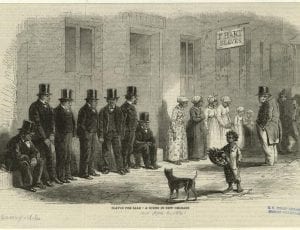
Old political cartoonIn January 2019, Representative Sheila Jackson Lee (D-Texas) introduced H.R. 40: The Commission to Study and Develop Reparations Proposals for African Americans Act.1 Reparations for slavery, Jim Crow, and systematic segregation and racism in major U.S. institutions is not a new idea, but it has never gained the type of traction that it currently has. In June, the House Judiciary Committee held hearings to begin exploring the idea.2
This bill would not automatically establish reparations. Instead, the bill would “establish a commission to study and consider a national apology and proposal for reparations for the institution of slavery, its subsequent de jure and de facto racial and economic discrimination against African Americans, and the impact of these forces on living African Americans, to make recommendations to the Congress on appropriate remedies.”3

WATCH: Senate Majority Leader Mitch McConnell (R-Ky.) responds to the bill

WATCH: Ta-Nehisi Coates, author of “The Case for Reparations,” testifies before the House Judiciary Subcommittee on the Constitution, Civil Rights, and Civil Liberties

Discussions about race, racism, and racial justice are becoming more central parts of our political discourse. The rising tide of white nationalism and white supremacy,4 including their increasing visibility in public spaces,5 has helped spur discussion about the legacy of racism in the United States. Movements and organizations such as Black Lives Matter and the Equal Justice Initiative, as well as publications such as Between the World and Me, The New Jim Crow, and the 1619 Project, have focused attention the legacies of slavery, Jim Crow segregation, economic exclusion, and mass incarceration.

In this social and political environment, the debate over reparations is taken more seriously—but is also more contentious—than it has been at other times.

Arguments in support of the bill:

The text of the bill contains arguments—findings—that support passage of the bill. Among those findings are:

  • Approximately 4,000,000 Africans and their descendants were enslaved in the United States and colonies that became the United States from 1619 to 1865.
  • The institution of slavery was constitutionally and statutorily sanctioned by the government of the United States from 1789 through 1865.
  • The slavery that flourished in the United States constituted an immoral and inhumane deprivation of Africans’ life, liberty, African citizenship rights, and cultural heritage, and denied them the fruits of their own labor.
  • Following the abolition of slavery, the U.S. government, at the federal, state, and local levels, continued to perpetuate, condone, and often profit from practices that continued to brutalize and disadvantage African Americans, including sharecropping, convict leasing, Jim Crow, redlining, unequal education, and disproportionate treatment at the hands of the criminal justice system.
  • As a result of the historic and continued discrimination, African Americans continue to suffer debilitating economic, educational, and health hardships, including but not limited to having nearly 1,000,000 black people incarcerated; an unemployment rate more than twice the current white unemployment rate; and an average of less than 1/16th of the wealth of white families, a disparity which has worsened, not improved over time.6

Arguments opposing the bill:

  • Charles Lane, a columnist for the Washington Post, argues that reparations may be unconstitutional because black people living today cannot show direct injury from slavery in the same way that other groups—such as Japanese Americans who lived through internment—have been able to do.7
  • Kevin Williamson, writing in National Review, argues that reparations would not accomplish what they are intended to accomplish and that the policies that would most help African Americans, and all Americans, would be economic and educational reform aimed at creating a dynamic and growing economy.8
  • Coleman Hughes, an African-American writer and student, argued against reparations before a congressional subcommittee, saying that reparations “would insult many black Americans by putting a price on the suffering of their ancestors. If we were to pay reparations today, we would only divide the country further, making it harder to build the political coalitions required to solve the problems facing black people today.”9
  • Representative Mike Johnson (R-La.) has spoken of “the injustice of monetary reparations from current taxpayers for the sins of a small subset of Americans from many generations ago.”10

The debate over this issue is taking place in the primary campaigns of Democratic presidential hopefuls, and Congress will continue to consider and possibly vote on the bill.


Discussion Questions

  1. What do you view to be the strongest arguments for and against the idea of reparations?
  2. If you were a member of Congress, what more would you want to know before voting on this bill?
  3. Setting aside the question of reparations, do you think that establishing a commission to investigate the impacts of slavery, segregation, and systemic racism is a good idea? Why or why not?
  4. If you are opposed to the idea of reparations in the form of cash or a check, do you think something else should be done to address the legacy and injustice of slavery and segregation? If so, what? If no, why not?


How to Get Involved

Students can continue to follow the bill on GovTrack.

Students can weigh in—as a group assignment or individually—by visiting this page.

Students can also research their member of Congress to see which committees they sit on. If their representative sits on the Judiciary Committee, they should consider contacting that member while the bill is still in committee.


Further Reading


Sources
Featured Image Credit: 19th Century Engraving via New York Public Library Digital Collection (Public Domain) and Wikipedia
[1] Congress.gov: https://www.congress.gov/bill/116th-congress/house-bill/40/text
[2] Ibid.
[3] Ibid.
[4] ABC News: https://abcnews.go.com/Politics/white-supremacy-white-nationalism-entered-political-conversation/story?id=64998396
[5] Inside Higher Ed: https://www.insidehighered.com/news/2019/06/27/white-nationalist-propaganda-rise-college-campuses
[6] Congress.gov: https://www.congress.gov/bill/116th-congress/house-bill/40/text
[7] Washington Post: https://www.washingtonpost.com/opinions/would-reparations-for-slavery-be-constitutional/2019/08/12/76677182-ba10-11e9-b3b4-2bb69e8c4e39_story.html
[8] National Review: https://www.nationalreview.com/2014/05/case-against-reparations-kevin-d-williamson/
[9] BBC: https://www.bbc.com/news/world-us-canada-48665802
[10] Ibid.


Religious Freedom or the Right to Discriminate?

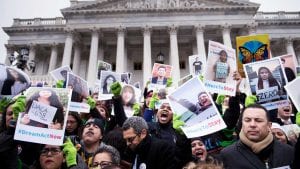
Protestors in Washington, DCOn August 15, the Department of Labor published proposed changes that would expand federal contractors’ ability to claim a religious exemption to equal opportunity and anti-discrimination rules.1 The proposed rule change, as written, could allow employers with federal contracts to fire or refuse to hire LGBTQ employees, and could even be used to fire unmarried pregnant women if an employer claimed that it was against their religion to support having sex out of wedlock.

The Department of Labor cites recent Supreme Court cases, such as Burwell v. Hobby Lobby (2014)and Masterpiece Cakeshop v. Colorado Civil Rights Commission (2018).3 In each of those cases, the Court allowed businesses to claim that the U.S. right to religious freedom exempted them from certain state or federal regulations. (Masterpiece Cakeshop was decided on narrow grounds and the Court cautioned that it should not necessarily be read as precedent.)

Drawing on opinions expressed by the Supreme Court in those cases and in other cases, the Department of Labor’s rule change would allow groups and companies with federal contracts that identify as religious to “make employment decisions consistent with their sincerely held religious tenets and beliefs without fear of sanction by the federal government.”4

The proposed rule is stirring controversy, as many civil rights activists see the change as discriminatory. Patricia Shiu, who oversaw the federal contracting office under President Barack Obama, told Vox that the new rule has the potential to be interpreted very broadly. As Shiu explained to Vox: “The new rule would gut anti-discrimination protections in a ‘major and transformational way.’ While the rule seems to target LGBTQ individuals … it’s so broad that it creates a loophole for employers to discriminate against anyone. … [Companies] could ask for a religious exemption so they don’t have to hire women, by saying that their religion dictates that women cannot work outside the home.”5

Louise Melling, deputy legal director of the American Civil Liberties Union (ACLU), warned that the rule “authorizes discrimination in the name of religion.”6 The ACLU also tweeted, “Nearly one-quarter of employees in the United States work for an employer that has a contract with the federal government. This rule seeks to undermine our civil rights protections and encourages discrimination in the workplace—and we will work to stop it.”7

Sarah Warbelow, legal director of the LGBTQ rights advocacy organization Human Rights Campaign, called the rule “a license to discriminate.”8

An official with the Department of Labor defended the rule, explaining to ABC News: “The Department’s regulations for a long time have allowed religious organizations to take applicants’ and employees’ religion into account when making employment decisions, that’s not new. This proposal only seeks to clarify who qualifies as a religious organization and what religion means under the law. That’s it.”9

In addition, acting Secretary of Labor Patrick Pizzella told The Christian Post, “Today’s proposed rule helps to ensure the civil rights of religious employers are protected. As people of faith with deeply held religious beliefs are making decisions on whether to participate in federal contracting, they deserve clear understanding of their obligations and protections under the law.”10


Discussion Questions

  1. Do you think that business owners and employers should have the right to refuse to hire someone on religious grounds? Why or why not?
  2. Are there some types of organizations (such as religious charities) that should have the right to use religion in their hiring and firing practices? Should that same right extend to all employers?
  3. How does this controversy connect to other issues you have heard about in the news? In history?
  4. Do you think the Department of Labor should adopt this new rule? Why or why not?


How to Get Involved

This proposed rule change is open for public comment until September 16, 2019. Anyone can submit a comment, and these comments must be reviewed and considered by the executive branch before it makes the change official.

Read the full proposed rule and submit a comment here:

Implementing Legal Requirements Regarding the Equal Opportunity Clause’s Religious Exemption

Consider having students work in small groups or individually to submit a comment supporting or challenging the proposed rule.


Other Resources


Sources
Featured Image Credit: Chip Somodevilla/Getty Images
[1] U.S. Department of Labor: https://www.dol.gov/newsroom/releases/ofccp/ofccp20190814
[2] New York Times: https://www.nytimes.com/2014/07/01/us/hobby-lobby-case-supreme-court-contraception.html
[3] Axios: https://www.axios.com/supreme-court-masterpiece-cakeshop-decision-dc2d9a59-76ce-40a3-8311-9da845d1ed9c.html
[4] U.S. Department of Labor: https://www.dol.gov/newsroom/releases/ofccp/ofccp20190814
[5] Vox: https://www.vox.com/identities/2019/8/16/20806990/trump-religion-lgbtq-discrimination-rule
[6] Washington Post: https://www.washingtonpost.com/religion/2019/08/14/trump-administration-proposes-protecting-federal-contractors-who-fire-or-hire-workers-based-religious-beliefs/
[7] United Press International: https://www.upi.com/Top_News/US/2019/08/14/New-Labor-Dept-rule-would-exempt-religious-contractors-from-bias-claims/1031565800736/
[8] Washington Post: https://www.washingtonpost.com/religion/2019/08/14/trump-administration-proposes-protecting-federal-contractors-who-fire-or-hire-workers-based-religious-beliefs/
[9] ABC News: https://abcnews.go.com/Politics/trump-administration-rule-religious-litmus-test-federal-contractors/story?id=64976149
[10] The Christian Post: https://www.christianpost.com/news/labor-dept-new-rule-protect-religious-liberty-federal-contractors.html