 Last week, the Supreme Court heard arguments in two cases involving President Donald Trump’s tax returns and financial records, Trump v. Mazars and Trump v. Deutsche Bank. During the 2016 election, then-candidate Trump broke with tradition and refused to release many of his financial records and tax returns. The president is suing his accountants and banks to prevent them from releasing his personal financial information to Congress. President Trump claims that executive privilege protects him from releasing any of this information to Congress; attorneys for the House of Representatives argue that executive privilege does not apply here.1 So, what is executive privilege and why is it in dispute?
Executive Privilege: Defined as Being Ill-Defined
Executive privilege is commonly defined as “shielding the president from having to disclose some internal executive branch communications.”2 However, as soon as anyone tries to define what communications count as privileged, there is often disagreement, some of which is likely political in nature and depends on the party occupying the executive branch.
The system of checks and balances makes the issue murkier. Since executive privilege is usually cited in disputes between two branches of government, the legislative and executive, the judicial branch tries to avoid weighing in so as not to favor one branch over the other. As a result, most guidance on executive privilege comes not from judicial rulings but from Department of Justice memoranda, which can be interpreted differently and modified with each new administration.3
Historical Use of Executive Privilege
The two most famous Supreme Court cases dealing with executive privilege are United States v. Nixon and Clinton v. Jones. In Nixon, President Richard Nixon claimed that executive privilege protected him from having to release the Watergate tapes to the special prosecutor. In a 8-0 decision, the Supreme Court ruled against the president on the basis that criminal activity was under investigation, which directly spoke to the president’s duties as chief executive.4
In Clinton v. Jones, executive privilege was invoked to stop President Bill Clinton from having to testify in relation to a sexual harassment accusation brought against him from before he was president. The Court also ruled against Clinton and established that activities prior to assuming the office of president were not protected.5
What Is In Dispute This Time?
If the Supreme Court has already ruled that activity prior to assuming the office of president is not protected, then why is there an unsettled question in these cases? In both United States v. Nixon and Clinton v. Jones, the legislative branch was not directly involved.
President Trump’s attorneys and other legal scholars argue that it is inappropriate for the judicial branch to rule on a dispute between two other co-equal branches of government, and that executive privilege is necessary to prevent Congress from burdening the president with legal battles. They argue that it is unclear why Congress is seeking the president’s financial information; particularly in the absence of a criminal charge, there is no standing to compel the president to release the information. Finally, they argue that the motives of the Democrat-controlled House are political, and that the chamber seeks to compel the president to release his records specifically to hurt his chances of reelection in November.6
The case being made by the House is that executive privilege has already been ruled as not absolute, that it only protects information related to the performance of presidential responsibilities, and that if the Supreme Court were to rule in favor of President Trump, it would unacceptably limit the oversight duties that Congress is supposed to have over the executive branch as part of the system of checks and balances. The House has also argued that the records it is seeking do not belong to the president but to Mazars and Deutsche Bank, which have both agreed to obey the subpoena.7
Discussion Questions
- Should there be a law requiring presidential candidates to release their tax returns and financial statements?
- Should the president have special protections, like executive privilege, that are not shared by individuals outside of the executive branch?
- What, if any, information should a president be allowed to keep private?
- Some argue that the importance and the highly political nature of the president’s role necessitate special privileges and protections, so political opponents cannot unfairly prevent the president from his/her duties. Others argue that for the very same reasons, the president should be subject to a higher standard and have the same protections as, or even fewer protections than, average citizens. What do you believe?
Featured Image Credit: Old Town Crier: https://oldtowncrier.com/2019/11/30/executive-privilege-and-impeachment/
[1] Washington Post: https://www.washingtonpost.com/outlook/2020/05/11/congress-trump-could-both-be-losers-supreme-court-this-week/
[2] SCOTUSblog: https://www.scotusblog.com/2019/10/executive-privilege-congress-subpoena-power-and-the-courts-a-brief-overview-of-a-complex-topic/
[3] Ibid.
[4] Portland Press Herald: https://www.pressherald.com/2020/05/13/the-conversation-historic-power-struggle-between-trump-and-congress-reviewed-by-supreme-court/
[5] SCOTUSblog: https://www.scotusblog.com/2019/10/executive-privilege-congress-subpoena-power-and-the-courts-a-brief-overview-of-a-complex-topic/
[6] Lawfare: https://www.lawfareblog.com/oral-argument-summary-supreme-court-hears-trump-financial-documents-cases
[7] Ibid.
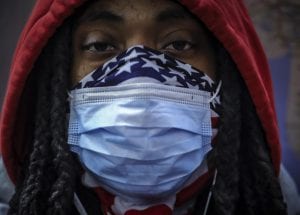 The ongoing COVID-19 pandemic is stressing our healthcare system, our economy, and parents trying to teach their children at home. It is also highlighting significant COVID-19 racial disparities in access to quality health care.
 As the COVID-19 2020 news headlines continue to dominate, the American public is facing an onslaught of information about the pandemic. Social and traditional media are covering developments, spreading opinions, and broadcasting statistics about COVID-19. There has been a strong association between coronavirus media coverage and an increase in public attention on the virus itself and in web searches for such terms as “N95” face masks.1 The role of media in the COVID-19 pandemic is significant in shaping public behavior, so as we head into the next phase of the pandemic, journalists and the general public are being forced to consider what role the media should assume moving forward.
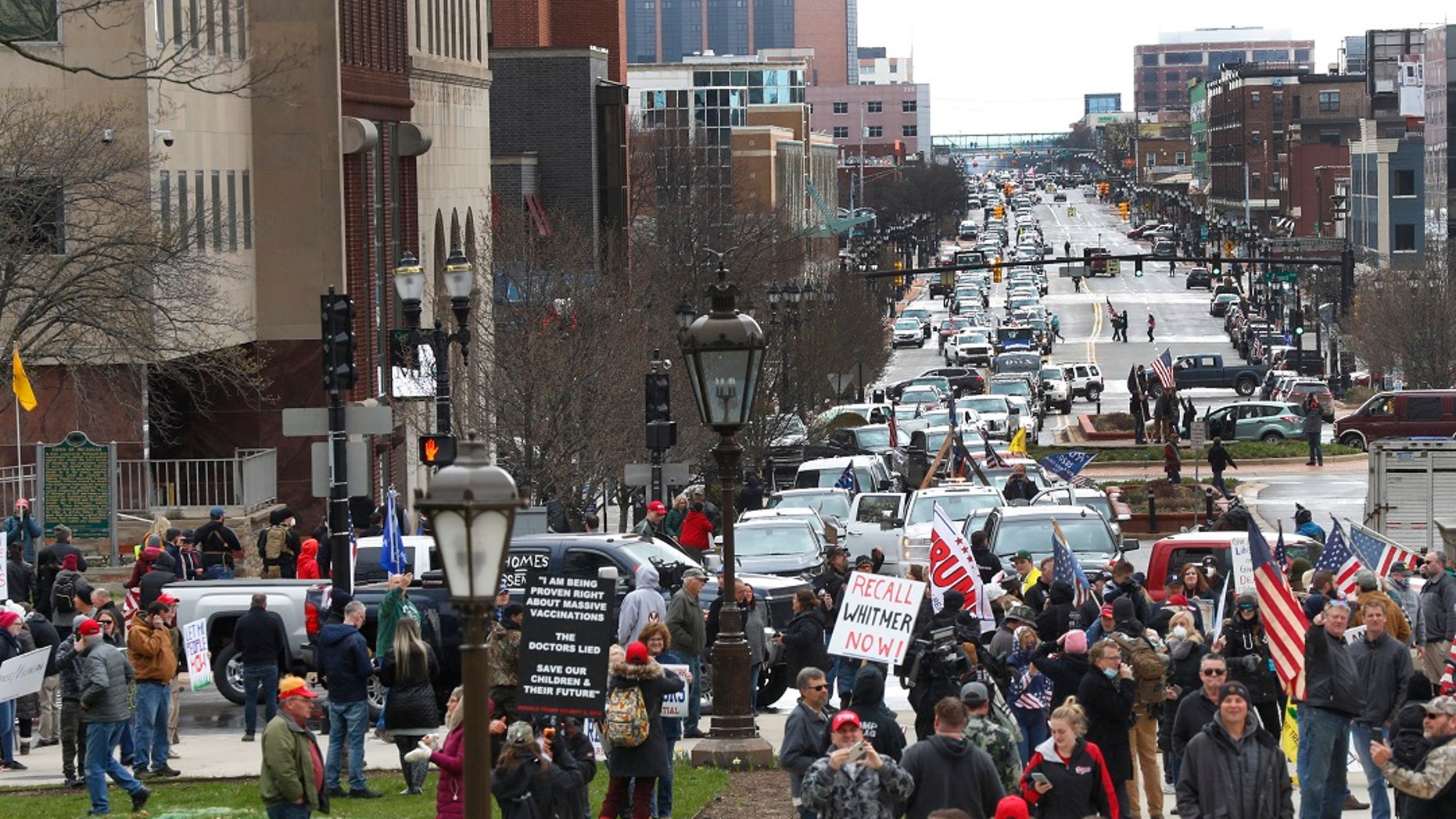
 s COVID-19 has spread across the country and the globe, most U.S. states have taken to issuing shelter-in-place orders to help “flatten the curve.” As of April 20, 42 states, the District of Columbia, and Puerto Rico had asked residents to stay at home. However, over the past two weeks, there has been an increase in protests against these orders, with some governors considering reopening their states for the sake of the economy.1
 Inequality has been a central issue of the 2020 presidential campaign, with many of the candidates including economic and income equity as major elements of their message.1 The COVID-19 outbreak has also placed economic inequality in the spotlight. While many professionals and white-collar workers are able to work from home, employees in the service industry are either continuing to work or going without pay.2
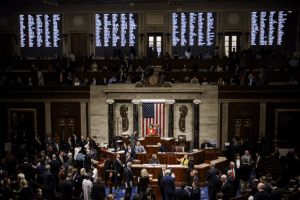 Due to the ongoing COVID-19 pandemic, 42 states—along with Puerto Rico and Washington, D.C.—have issued stay-at-home orders, effectively barring at least 316 million Americans from going out unless absolutely necessary.1 While essential businesses and services remain open, many workers now find themselves working from home. Considering the circumstances, should Congress also be allowed to vote remotely?
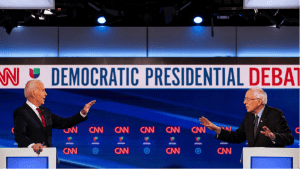 With COVID-19 dominating both the headlines and the realities of everyday life in the United States, it can be hard to remember that we are in the midst of a presidential primary with a general election only seven months away.
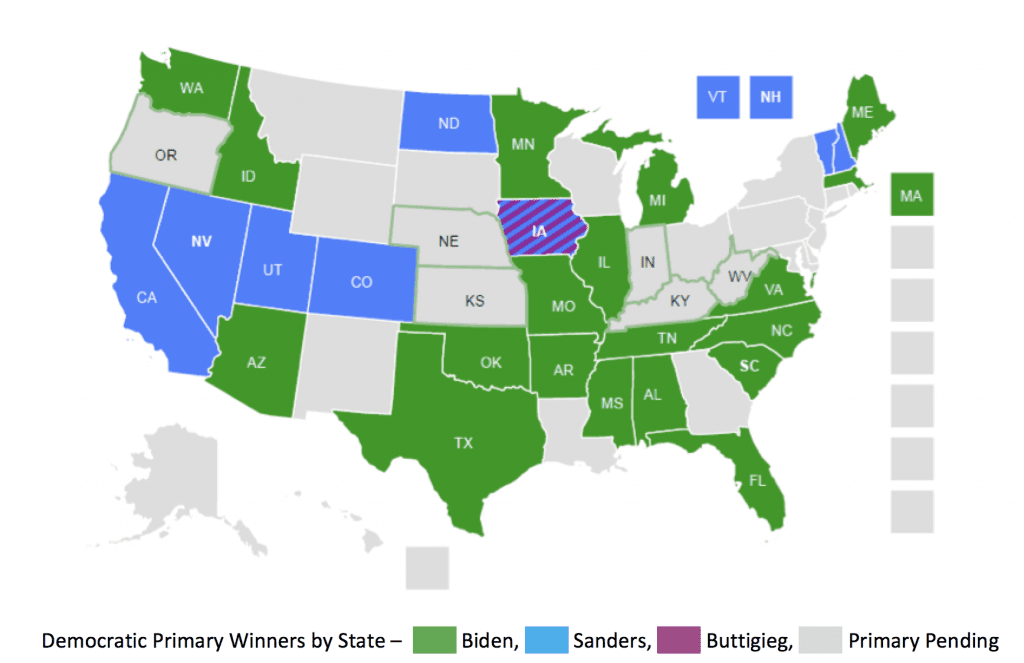 Primary Postponements
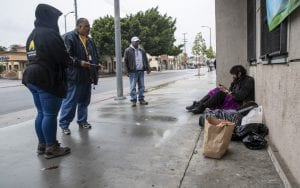 The novel coronavirus, COVID-19, is affecting every American and people all over the world, but it does not affect everyone equally. The more than 500,000 Americans who are homeless are especially vulnerable—due to age, lack of access to health care, underlying medical conditions, and lack of access to information and news—and also pose a risk in terms of continuing to spread the virus.1
 In the face of the spreading COVID-19 pandemic, government officials and medical experts are calling on people all over the world to practice social distancing.1 In general, this means canceling events and gatherings, avoiding large groups and crowds, and, when possible, staying home.







:format(webp):no_upscale()/cdn.vox-cdn.com/uploads/chorus_asset/file/19335094/GettyImages_1184645619.jpg)