Summer Round-Up #3: Protests, Police Reform, and Civil Unrest

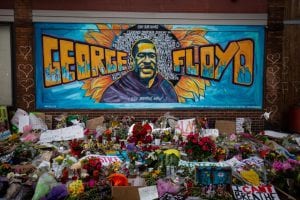
This summer has been more dramatic and more tumultuous than any other in recent memory. To help teachers and students explore key issues from this summer, we have done a series of summer round-up articles including developments related to the COVID-19 pandemic and our review of the 2020 campaigns and conventions. In our third and final summer round-up, we examine the protests and policy responses since Minneapolis police killed George Floyd in May. The police shooting of Jacob Blake in Kenosha, Wisconsin, reinvigorated the protests and demands for reform and justice.1

A Summer of Protests

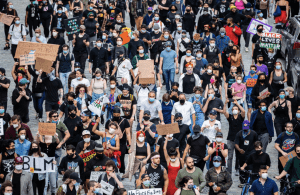
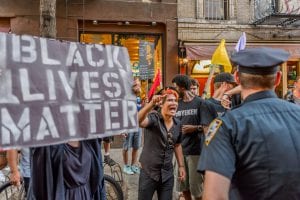
Over the course of the summer, protests broke out and continued around the country. In major cities such as Portland, Oregon,2 and Louisville, Kentucky,3 protests have been daily or almost daily. The protests have ranged in their intensity and have evoked a wide array of responses from the media and public officials. Federal agents used tactics that raised alarm bells in Portland, grabbing suspected protesters from off the street in unmarked vans. Some called these actions kidnapping,4 and evidence suggests that they escalated the tension and violence in that city.5

LISTEN: From The Daily, “The Showdown in Portland”

In some cases, protests have coincided with violence and looting, frequently distracting the media and the public from the protesters’ cause.6 President Donald Trump has pointed to the violence as evidence that a greater police presence,7 and even a military presence,8 is needed. And, while polls showed that support for the Black Lives Matter movement was at an all-time high in the weeks following Floyd’s killing,9 that support has decreased as the protests have continued.10
Clippers

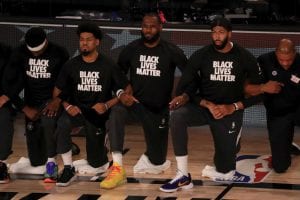
Activists and advocates across the country are working to identify ways to keep pressure on policymakers and to keep their cause in the public eye. On August 28—the 50th anniversary of the March on Washington for Jobs and Freedom at which Martin Luther King Jr. delivered his “I Have a Dream” speech—the NAACP and other groups coordinated a virtual March on Washington.11 The family of Blake, the man shot by police in Kenosha, participated in that march.12 Athletes have also used their platforms to raise awareness. The NBA’s Milwaukee Bucks decided to boycott a playoff game, ultimately leading to a brief shutdown of the league.13

Summer of Reform

The protests have continued to shine a light on police practices and procedures that activists believe to be unjust. Some jurisdictions have instituted reforms. Many states and cities have banned the use of chokeholds and similar tactics. Cities and states have passed bills to make it easier to hold police officers accountable for wrongdoing.14 There are also newly instituted bans on the use of tear gas and no-knock warrants,15 the latter of which played a role in the police killing of Breonna Taylor.16

However, larger, more significant reform efforts have stalled. For example, in California, lawmakers proposed several bills that would have made police departments and records more transparent and that would have created civilian oversight commissions to investigate alleged instances of police brutality. Legislators decided not to take up those bills before the end of the session.17 Virginia legislators considered, but ultimately rejected, a bill that would have ended qualified immunity for police officers.18 Qualified immunity, established by the Supreme Court in a 1967 ruling, shields public officials from legal suits if the plaintiff is not able to establish that a clear violation of rights occurred before the case begins.19 This practice makes it difficult for people to bring cases against police officers and other civil servants. A Reuters analysis of data from qualified immunity cases found that in more than half of cases, police officers were protected from prosecution by the statute.20

At the federal level, there are several bills that have been introduced and, in some cases, passed by the House of Representatives. One such bill, the George Floyd Justice for Policing Act, passed the House in June.21 If it became law, this bill would make it easier to investigate, indict, and convict police officers for use of excessive force and would grant the Department of Justice more authority in examining patterns of abuse in police departments across the country. This bill has been introduced, but not yet debated, in the Senate.

Protesters’ most ambitious demand, the call to defund the police, remains unmet. In Minneapolis, the city council initially committed to disbanding the police department and replacing it with a Department of Community Safety and Violence Prevention and a Department of Law Enforcement.22 However, that effort has stalled in the city council until at least 2021.23

WATCH: From The Guardian, “What Does It Mean to Defund the Police?”

Defunding or abolishing police departments would be a significant change in state and local governments. It is a new idea to most Americans. Initial polling indicated that most Americans oppose the idea, but as people have learned more about it, those opinions have seemed to be in flux.24

WATCH: From PBS NewsHour, “Two Views on the Future of American Policing”

State and local governments across the country are grappling with questions about the future of policing, criminal justice, and issues pertaining to racial justice. And, during this election, some national politicians are calling for change at the federal level. Meanwhile, people across the country are protesting, hoping to keep these issues on the public agenda.

Discussion Questions

  1. Have there been protests in or near your community? What impact have they had?
  2. Do you have a mostly positive or mostly negative view of the protests? Why? Do your reasons have to do with what you see happening, your views on the issues, or both?
  3. Which of the suggested police reforms, if any, do you agree with? Why?
  4. Do you think the federal government should take action to reform policing, or do you think those efforts are best handled at the state and local levels?
  5. Do you support the George Floyd Justice in Policing Act? Why or why not?
  6. What do you think of the call to defund the police? Explain your answer.

Possible Extension Activities

  1. Have students read the George Floyd Justice in Policing Act and work together to write letters to their senators in support or in opposition.
  2. Ask students to research “defunding the police” or “abolishing the police” to understand the different ideas and policies involved in that demand. Resources embedded in this post provide good starting points, as does this overview from the Associated Press.
  3. After researching the ideas of defunding the police, ask students to design a model for providing/enforcing community safety. What would they prioritize? What agencies would they need? What would those agencies do?


Sources

Featured Image Credit: Getty Images
[1] CBS News: https://www.cbsnews.com/news/jacob-blake-sr-kenosha-wisconsin-police-shooting-victim/
[2] CNN: https://www.cnn.com/2020/09/02/us/portland-protests-wednesday/index.html
[3] National Public Radio: https://www.cnn.com/2020/09/02/us/portland-protests-wednesday/index.html
4] PolitiFact: https://www.politifact.com/factchecks/2020/aug/04/bob-casey/sen-bob-casey-said-federal-agents-kidnapped-protes/
[5] National Public Radio: https://www.npr.org/2020/08/06/899882025/portland-protests-de-escalate-as-federal-agents-leave-city-streets
[6] USA Today: https://www.usatoday.com/story/opinion/2020/08/31/riots-violence-erupting-turning-many-away-blm-and-protests-column/5675343002/
[7] Business Insider: https://www.businessinsider.com/trump-police-endorsement-speech-officers-fight-back-2020-8
[8] Council on Foreign Relations: https://www.cfr.org/in-brief/trumps-threat-use-military-against-protesters-what-know
[9] FiveThirtyEight: https://fivethirtyeight.com/features/support-for-black-lives-matter-surged-during-protests-but-is-waning-among-white-americans/
[10] Boston Globe: https://www.bostonglobe.com/2020/09/01/opinion/support-black-lives-matter-is-dropping-among-white-americans/
[11] NAACP.org: https://www.naacp.org/marchonwashington/
[12] Chicago Tribune: https://www.chicagotribune.com/suburbs/evanston/ct-jacob-blake-family-kenosha-protest-plans-20200828-f6xbocfmqbdzdfhzy46z753ssq-story.html
[13] CBS Sports: https://www.cbssports.com/nba/news/nba-boycott-how-players-reached-decision-to-resume-season-timeline-overnight-disagreement-owners-role/
[14] Minneapolis Star-Tribune: https://www.startribune.com/states-race-to-pass-policing-reforms-after-floyd-s-death/572051772/?refresh=true
[15] Axios: https://www.axios.com/police-reform-george-floyd-protest-2150b2dd-a6dc-4a0c-a1fb-62c2e999a03a.html
[16] USA Today: https://www.usatoday.com/story/news/factcheck/2020/06/30/fact-check-police-had-no-knock-warrant-breonna-taylor-apartment/3235029001/
[17] Los Angeles Times: https://www.latimes.com/california/story/2020-09-02/california-police-reform-bills-derailed
[18] ABC 8 News, Richmond, Virginia: https://www.wric.com/news/politics/virginia-house-rejects-bill-eliminating-qualified-immunity-for-police/
[29] Cornell Law School’s Legal Information Institute: https://www.law.cornell.edu/wex/qualified_immunity
[20] Reuters: https://www.reuters.com/investigates/special-report/usa-police-immunity-scotus/
[21] Congress.gov: https://www.congress.gov/bill/116th-congress/house-bill/7120/actions
[22] CNN: https://www.cnn.com/2020/08/06/us/minneapolis-police-abolish-delay/index.html
[23] Bloomberg: https://www.bloomberg.com/news/articles/2020-08-13/minneapolis-falters-in-plan-to-disband-the-police
[24] New York Times: https://www.nytimes.com/2020/07/03/us/politics/polling-defund-the-police.html
 

Summer Round-Up #2: Campaigns, Conventions, and the Race to Election Day

Over the course of the summer, the 2020 election has taken shape. Most primaries for congressional office have concluded, and the parties and presidential candidates were able to showcase their respective visions during their conventions. In this second summer round-up, we take a look at the state of the 2020 election. Our first summer round-up explored the ongoing impact of the coronavirus and the responses to the pandemic. Our third and final summer round-up will discuss ongoing protests, the Black Lives Matter movement, and the changing politics of race and equity since the murder of George Floyd.

Congressional Races

All of the seats in the House of Representatives are up for election this year, as are a third of the seats in the Senate. The presidential election inevitably receives the most attention, but control of Congress plays a significant role in shaping U.S. politics as well. At the moment, the Republican Party controls the Senate1 while the Democratic Party controls the House of Representatives.2 It is technically possible for both chambers to change hands, although the latest polls and expert observers predict that Republicans are unlikely to win enough seats to take control of the House.3 The Senate is more competitive. Currently, Republicans hold 53 seats to Democrats’ 47 (including two independents who caucus with the Democratic Party).4 Some election observers predict that Democrats will win enough seats to secure a majority in the Senate,5 while others believe the races remain too close to call.6

One of the key dynamics in the congressional primaries has been the contest for the future of the Democratic Party. Centrist Democrats mounted unsuccessful challenges to young, progressive women of color, including Reps. Rashida Tlaib (D-Mich.), Alexandria Ocasio-Cortez (D-N.Y.), Ilhan Omar (D-Minn.), and Pramila Jayapal (D-Wash.).7 Meanwhile, several progressive challengers, most notably Jamal Bowman of New York8 and Cori Bush of Missouri,9 were able to knock off centrist Democratic incumbents. The presidential primary contests between Sen. Bernie Sanders (I-Vt.) and former Secretary of State Hillary Clinton in 2016 and between Sanders and former Vice President Joe Biden in 2020 also highlighted philosophical differences and tensions within the party.10 This fight will likely continue after Election Day, no matter the outcome.

Party Conventions and Visions for the Future

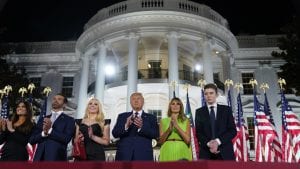
Both parties have now completed their quadrennial conventions to cement their priorities and nominate their presidential candidates.

WATCH: PBS NewsHour’s 17-minute video with highlights from both conventions

The Democratic National Convention focused on two major themes: party unity and defeating President Donald Trump.11 Speakers largely argued that President Trump is a threat to democracy, as well as a threat to people’s lives, pointing to his administration’s handling of the coronavirus.12

Meanwhile, President Trump and Republican speakers argued that Biden and the Democratic Party represent a radical shift towards socialism and communism.13 In an unusual move, the Republican Party decided not to draft a new platform for 2020, and instead ratified its 2016 platform once again and offered a strong endorsement of President Trump as the voice of the party.14

READ: NPR’s 7 Takeaways from the Democratic Convention and 7 Takeaways from the Republican Convention

Final Days of the Election

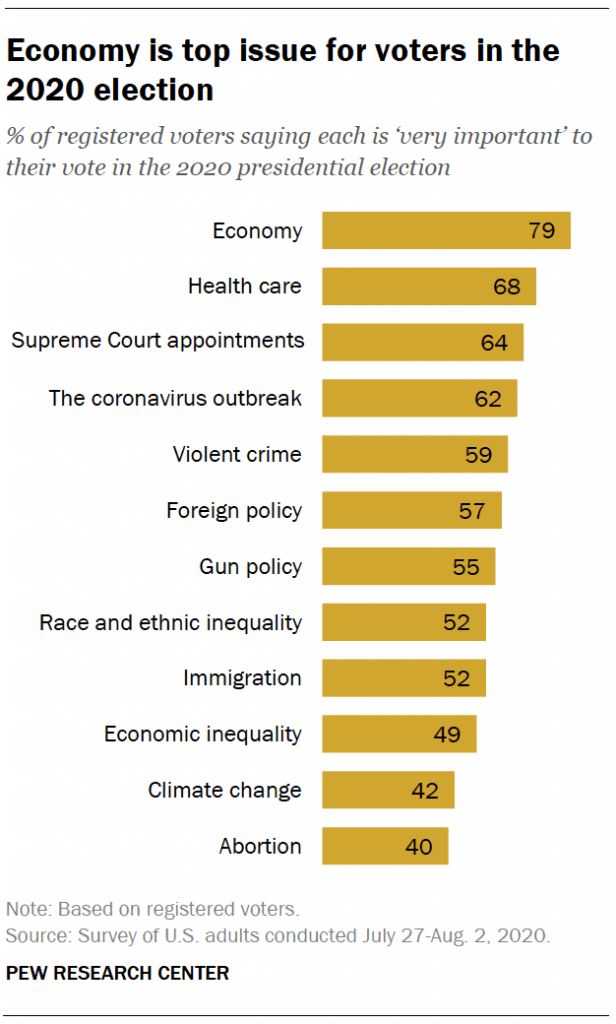
There are a little over two months left until Election Day. The economy and COVID-19, two of the issues on the top of most voters’ minds, are in constant flux. The stock market is experiencing significant gains, especially in the technology sector,15 but the unemployment rate remains high and seems to be growing.16

Credit: Pew Research Center

While many big issues clearly weigh on the minds of voters, the presidential campaign has largely focused on character and vision. Looking ahead, the debates and the candidates’ closing arguments will add further definition to the differences between the two men. However, many voters may begin voting by mail before the election cycle reaches that final push.

Discussion Questions

  • Which Senate and House races are taking place where you live? Are they contested? Who do you and your family support?
  • Which of the presidential candidates do you support? Why?
  • If you were voting in this election, would you be excited to support your preferred candidate? Why or why not?
  • Have you seen many political advertisements? For or against which candidates? How do those ads impact you?


Sources

Featured Image Credit: Evan Vucci/AP
[1] Senate.gov: http://www.senate.gov/senators/leadership.htm
[2] House.gov: https://www.house.gov/leadership
[3] Cook Political Report: https://cookpolitical.com/ratings/house-race-ratings
[4] Senate.gov: https://www.senate.gov/history/partydiv.htm
[5] Real Clear Politics: https://www.realclearpolitics.com/epolls/2020/senate/2020_elections_senate_map_no_toss_ups.html
[6] Cook Political Report: https://cookpolitical.com/ratings/senate-race-ratings
[7] Fox News: https://www.foxnews.com/politics/omar-victory-sees-squad-hold-own-during-primary
[8] New York Times: https://www.nytimes.com/2020/07/17/nyregion/jamaal-bowman-eliot-engel.html
[9] St. Louis Post-Dispatch: https://www.stltoday.com/news/local/govt-and-politics/you-saw-cori-bush-challenger-s-visibility-helped-her-make-inroads-in-clay-s-strongholds/article_96c80b6b-1941-5cb7-be0e-32e05634c2e4.html
[10] New York Times: https://www.nytimes.com/2020/08/05/us/politics/election-primary-results.html
[11] New York Times: https://www.nytimes.com/2020/08/21/us/politics/dnc-takeaways-biden-obama.html
[12] CBS News: https://www.cbsnews.com/news/democratic-national-convention-takeaways-moments/
[13] BBC News: https://www.bbc.com/news/election-us-2020-53942272
[14] BBC News: https://www.bbc.com/news/election-us-2020-53914829
[15] Forbes: https://www.forbes.com/sites/sergeiklebnikov/2020/08/28/us-tech-stocks-are-now-worth-more-than-9-trillion-eclipsing-the-entire-european-stock-market/#3ab2e44e3e61
[16] U.S Department of Labor: https://www.dol.gov/newsroom/releases/eta/eta20200827


Summer Round-Up #1: The Pandemic, Schools, and The Economy

The Pandemic, Schools and The EconomyThe summer of 2020 has been unlike any other. Schools across the country did not finish the end of the academic year in person, and many will not be seeing students in person once again this fall. Major events have been canceled or moved online, and we are in the midst of a presidential election that looks quite different from previous elections. On top of all the changes brought by COVID-19, the killing of George Floyd at the hands of police in May sparked protests across the country and around the world. In our first blog posts of the 2020-2021 school year, we will look back at key social and political issues from the summer so we may look ahead to the November election and beyond.
Responding to the COVID-19 Pandemic

Over the summer, the COVID-19 pandemic deepened and spread. In May and June, the infection rate seemed to be slowing, but by mid-July, almost 75,000 new cases were being reported daily. As of August 20, the seven-day average for new infections is more than 46,000 per day.1 The duration and depth of the pandemic is forcing citizens and policymakers to confront challenging questions about life under quarantine, the crippled economy, and the appropriate government response.

For additional background on COVID-19 and the government response, please see our posts about reopening the economy and enforcing social distancing.

Back to School COVID-19

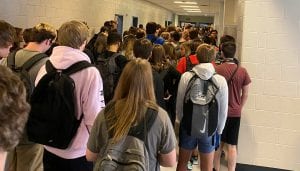
One major area of focus is schools. Schools in some parts of the country have reopened;2 in a few cases, they have had to close after an outbreak.3 The Centers for Disease Control and Prevention updated its COVID-19 school reopening guidelines to emphasize the importance of schools opening.4 However, images such as this one captured by a Georgia high school student have some parents, students, and teachers concerned.

WATCH: From A Starting Point, Reps. Josh Gottheimer (D-N.J.) and Tom Reed (R-N.Y.) debate: Should U.S. students go back to school in-person or virtually this fall?

The economy is another major area of concern amid the pandemic. The unemployment rate is now approximately 10 percent. More than 57 million people have lost their jobs in the United States5 and there are growing concerns that many of those jobs will not return, even as the pandemic recedes or a vaccine is developed.6 Policymakers face tough questions about how to respond to the dual public health and economic crises. Some advocate reopening businesses and schools so people can get back to work.7 Others are more cautious, arguing that the infection rate is not under control in many parts of the country.8

WATCH: From A Starting Point, Reps. Judy Chu (D-Calif.) and Kelly Armstrong (R-N.D.) debate: How should states reopen while preventing the spread of COVID?

The government provided a one-time relief check to many Americans and offered supplemental unemployment insurance through the CARES Act, but many people are still hurting.9 The additional unemployment insurance has expired and Congress did not authorize additional measures before going on recess. President Donald Trump signed executive orders to offer additional unemployment insurance benefits, but so far, the program has not dispersed any money and it is unclear if it ever will.10

One proposal, introduced by Sens. Bernie Sanders (I-Vt.), Kamala Harris (D-Calif.), and Ed Markey (D-Mass.), would give every American over the age of 18 $2,000 per month until the end of the pandemic.11 Another more comprehensive bill, the HEROES Act, passed the House of Representatives in May. That bill would provide additional $1,200 payments to most individuals, provide premium pay for essential workers, fund local and state governments, and extend a moratorium on evictions.12

These challenging and complex issues are impacting the lives of all Americans. They are also having a profound effect on the 2020 election. In our next blog post, we will explore key developments in the presidential and congressional races over the course of the summer, highlight significant moments from the Republican and Democratic conventions, and prepare for the final push to Election Day.

Discussion Questions

  • How are schools in your area handling the pandemic? Do you support your school’s plan?
  • What different opinions do people in your community hold about whether or not to go back to school in person?
  • How has the pandemic impacted the economy in your community? Which businesses are struggling? Do you know people whose jobs have been affected?
  • Do you think that restrictions on social gatherings and businesses should be lifted? Why or why not?
  • What, if anything, do you think Congress should do to protect workers, the unemployed, and the economy?


Sources

Featured Image Credit: Demetrius Freeman, New York Times
[1] New York Times: https://www.nytimes.com/interactive/2020/us/coronavirus-us-cases.html
[2] USA Today: https://www.usatoday.com/story/money/2020/08/03/every-states-plan-to-reopen-schools-in-the-fall/112599652/
[3] WFYI (Indianapolis Public Television): https://www.wfyi.org/news/articles/as-schools-reopen-more-covid-19-cases-confirmed-in-central-indiana
[4] CNN: https://www.cnn.com/2020/08/21/health/cdc-covid-19-school-guidelines/index.html
[5] Fox 6 Milwaukee: https://www.fox6now.com/news/millions-of-jobs-lost-to-coronavirus-pandemic-could-take-years-to-return
[6] Politico: https://www.politico.com/news/2020/08/06/coronavirus-permanent-unemployment-392022#:~:text=More%20jobs%20are%20disappearing%20for,of%20a%20rapid%20economic%20rebound.&text=Tens%20of%20millions%20of%20Americans,positions%20are%20going%20away%20forever.
[7] Axios: https://www.axios.com/rand-paul-stimulus-recession-9add0781-c1fc-4ebb-89b3-f99ca682c1a1.html
[8] Forbes: https://www.forbes.com/sites/enriquedans/2020/08/22/covid-19-there-is-only-onepriority/#33a96a9354bb
[9] CNBC: https://www.cnbc.com/2020/08/12/are-second-1200-stimulus-checks-coming-heres-what-we-know.html
[10] Forbes: https://www.forbes.com/sites/shaharziv/2020/08/10/400-unemployment-extension-start-trump-signs-executive-order-in-lieu-coronavirus-stimulus-package/#de53f7247c78
[11] CNBC: https://www.cnbc.com/2020/05/08/coronavirus-kamala-harris-bernie-sanders-propose-2000-monthly-payments.html
[12] Congress.gov: https://www.congress.gov/bill/116th-congress/house-bill/6800


Leadership & Media Engagement in the Digital Age

During this seminar Close Up’s, Chief Development Officer, Mia Charity discusses ‘Leadership & Media Engagement in the Digital Age’ with David Almacy, Founder of CapitalGig LLC.  Learn about the power of media in politics  

A recognized leader in communications, David brings over 20 years of experience at the intersection of public relations, digital, media, government and public affairs including positions at Edelman, Waggener Edstrom, The White House, U.S. Department of Education, C-SPAN, Phi Delta Theta Fraternity, and the Republican National Committee.   


Opening the Economy during COVID-19

During this seminar Close Up’s, Joe Geraghty discusses ‘Opening the Economy during COVID-19 with Michael Carney, Senior Vice President, Emerging Issues with the U.S. Chamber of Commerce Foundation.  Michael shares how the pandemic has impacted business and education and the logistical challenges communities face associated with the new regulations.   

Mike Carney helps America’s business leaders prepare for the future. Through original research and thought-provoking events, the emerging issues team bridges the gap between theory and practice to prepare for the technological, social, and policy changes that are reshaping the world. 


Protests, Riots, Justice, and the Rule of Law

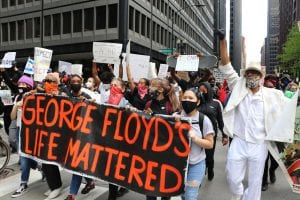
George FloydOn Monday, May 25, a Minneapolis police officer named Derek Chauvin killed George Floyd by kneeling on his neck for over eight minutes.1 The next day, video of the killing went viral; by the end of the day, large groups had begun protesting in Minneapolis. In the week since, protests have spread to many major cities across the country, and some protests have had destructive consequences.2 It is not always clear who starts the violence and vandalism,3 and there is evidence to suggest that responses from the police are making the violence worse.4 In many ways, the scenes mirror the origins of the Black Lives Matter movement in Ferguson, Missouri, in 2014—another time when police efforts to respond to protests were met with, or perhaps sparked, violence.5
This week, we are offering three blog posts that grapple with the fundamental questions and challenges posed by recent events. On Tuesday, we shared resources and ideas for discussing race and racism with students. Today’s post will explore the protests and the government response to them.

Over the weekend, what began as nonviolent demonstrations in many cities around the United States became sites of property destruction, fires, and escalating responses from police.6 In editorials and commentary in newspapers, on television, and on social media, people are discussing serious questions about the protests. To help your students explore a few of them, we share some questions and resources below.

Protests, Social Movements, and Violence

Protest and social change have rarely been as smooth as history textbooks and movies make them seem. In our present context, some argue that the violence near the protests undercuts the power of their message. Others, however, point to a quote from Dr. Martin Luther King, Jr., who said, “I think America must see that riots do not develop out of thin air. Certain conditions continue to exist in our society which must be condemned as vigorously as we condemn riots. But in the final analysis, a riot is the language of the unheard.”

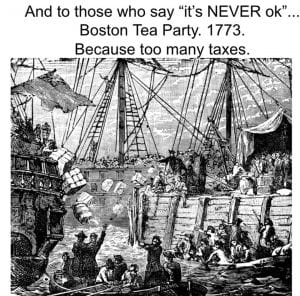
Additionally, those who argue that the destruction of property can be justified frequently point to the violent roots of the United States itself, including the Boston Tea Party, and circulate memes like this one.

While the level of violence in the current protests seems to be decreasing,7 it is still important to consider the role of violence in social movements. Here, we share some resources that might help you have those discussions.

  • Fareed Zakaria interviews Nikole Hannah-Jones, creator of the 1619 Project. Jones offers an explanation of the violence and offers historical context.
  • In his New York Times column, Ross Douthat argues that violent protests do not work.
  • Dylan Scott argues on Vox.com that it is wrong to focus too much on the violent protests, and that people are missing the main story.
  • This episode of The Daily podcast from the New York Times offers in-depth reporting on the protests over the weekend.
  • In an interview with WBUR, Dr. Marc Lamont Hill argues that protests should be framed as “acts of rebellion,” not riots.

Police and Governments Respond to the Unrest

A second major question facing citizens is how local, state, and national government should respond during this time of protest. President Donald Trump has called for a strong police, and even military, response.8 This has led many Americans to debate the best path forward in responding to the violence that surrounds the protests. Here are some resources that may help you explore government responses to protests with your students:

  • Radley Balko explores this question in an article published shortly after the protests in Ferguson in 2014.
  • FiveThirtyEight and the The Marshall Project argue that de-escalation by police does more to keep protesters and police safe.
  • President Trump explains the role that he sees for government during the protests.
  • The June 4 episode of The Daily podcast from the New York Times looks closely at the protests and police actions at the White House.
  • This opinion article in The Guardian argues that police are more responsible for the violence than the protesters because of their tactics.
  • In this op-ed published in the New York Times, Senator Tom Cotton (R-Ark.) calls for using troops to quell the protests.
  • Retired General James Mattis, President Trump’s former secretary of defense, argues in a letter circulated to the media that using the military is not appropriate or constitutional.

We hope that these resources help you examine these complex, challenging, and vital issues with your students. If you have other resources to share with teachers and students, please submit them in the comments below.

Sources

Featured Image Credit: Evan Garcia/WTTW News
[1] New York Times: https://www.nytimes.com/article/george-floyd-protests-timeline.html
[2] CNN: https://www.cnn.com/us/live-news/george-floyd-protests-06-01-20/index.html
[3] New York Times: https://www.nytimes.com/2020/05/31/us/george-floyd-protests-white-supremacists-antifa.html
[4] The Guardian: https://www.theguardian.com/commentisfree/2020/jun/01/george-floyd-violent-rioters-america-police-officers
[5] Business Insider: https://www.businessinsider.com/how-the-cops-made-things-worse-in-ferguson-2014-8
[6] Vox: https://www.vox.com/2020/5/30/21275574/george-floyd-protests-minneapolis-detroit
[7] New York Times: https://www.nytimes.com/reuters/2020/06/02/us/02reuters-minneapolis-police-protests-pentagon.html?searchResultPosition=10
[8] Politico: https://www.politico.com/news/2020/06/01/trump-slams-governors-as-weak-crackdown-on-protests-294023


Religious Liberty & COVID-19

During this seminar, Close Up’s Joe Geraghty discusses Religious Liberty & COVID-19 with Benjamin P. Marcus, Religious Literacy Specialist with the Religious Freedom Center of the Freedom Forum Institute.  Benjamin talks about the First Amendment and the restrictions places on religious institutions during the pandemic. 

Mr. Marcus has developed religious literacy programs for public schools, universities, U.S. government organizations, and private foundations, and he has delivered presentations on religion at universities and nonprofits in the U.S. and abroad. He has worked closely with the U.S. State Department, Interfaith Youth Core, the Foundation for Religious Literacy, and the Cambridge Inter-Faith Programme in the United Kingdom. 


Discussing Race & Racism with Students

black lives matter

Over the past week, we have witnessed an outpouring of grief and rage that reminds us—again—that democracy is always in the making and that we have a responsibility both to reflect and to act. As civic educators, we naturally turn our attention to what we can do, and what we can teach, that might further advance dialogues about freedom, equality, and justice. We hope that through our resources and the resources of others, and through discussions with teachers, we can help you have rich, meaningful dialogue with students about these complex issues.

To that end, this week we will offer three blog posts to help you grapple with the fundamental questions and challenges posed by recent events. The first, this post, provides resources and ideas for discussing race and racism with students. Wednesday’s post will explore the protests and the government responses to those protests.

Hopefully, the resources we share here help you and your students, but we also want to hear from you. What resources, lessons, questions, and ideas do you turn to when trying to help students better understand the important issues raised by the protesting?

Resources

To discuss race and racism:

  • The National Museum of African American History and Culture has created a resource called Talking About Race. The conversation guides and reflection questions help individuals think about and discuss race.
  • Teaching Tolerance offers Strategies for Reducing Racial and Ethnic Prejudice. These strategies help teachers think about the goals of discussions about race and prejudice, as well as reflect on their own positions and experiences.
  • Black Lives Matter at School has created and curated a wide range of resources to help teachers and students investigate issues relating to race and racism in America today.
  • In a short article published in ASCD, Dena Simmons explains How to be an Anti-Racist Educator.

To discuss race and racism in U.S. history:


Sources

Featured Image Credit: Erik McGregor/Pacific Press/LightRocket


Enforcing Social Distancing & Wearing Masks

COVID 19 Open SignIn order to combat the spread of COVID-19, people are making many changes in their habits and routines. Two central recommendations of public health officials are that people remain socially distant1 by staying six or more feet from people and avoiding non-essential trips outside the home, and that people wear masks when in public.2 This has raised questions about the government’s authority to impose social distancing and mask restrictions, as well as the rights and responsibilities of business owners to protect their employees and customers.

In some cities and towns, the government has attempted to enforce social distancing and mask wearing with sometimes troubling results. For example, in New York City, the epicenter of the pandemic in the U.S. for several weeks, police arrested at least 40 people for failing to wear masks or practice social distancing. Of those 40 people, 35 were black, reigniting concerns over racial disparities in the policing.3 As city officials in New York and other communities consider new ways to enforce public health regulations, some cities try novel approaches. For example, in Clearwater, Florida, the city is employing civilian ambassadors to walk the beaches and remind people of social distancing guidelines.4

WATCH: Americans Celebrate Memorial Day Amid Coronavirus Pandemic (CBS News)

Many people are upset by the social distancing guidelines and efforts to enforce them. There have been anti-shutdown protests in many states across the country and around the world5, including armed protests at the state capitol in Michigan.6 While such protests are constitutionally protected, the very act of protesting may be spreading the virus.7 Those who are upset at efforts to enforce public health measures have come into conflict with people, such as grocery store, retail, and restaurant employees who are responsible for enforcing their employers’ policies.

WATCH: Face Mask Rules Lead to Violent Confrontations

These challenges are straining our society in new ways, raising questions about the authority of government, the rights of individuals, and the meaning of the common good. In a future post, we will examine the ways in which the definition of freedom is being contested in these times.

Discussion Questions

  1. What are some reasons that people might have to insist on not wearing masks in public places?
  2. Should stores and other establishments be allowed to ban people who do not wear masks or follow social distancing guidelines?
  3. How should local governments encourage people to follow public health guidelines? Should police be involved to issue fines and make arrests? If not, why not? What other mechanisms do communities have?
  4. What role do we all have in preventing the spread of the virus?
  5. Should governments have the authority to enforce public health guidelines? Why or why not?

Further Resources:

  • Can businesses refuse to serve customers who don’t wear masks? (from KIRO-7, Seattle’s ABC News affiliate)
  • “6 Feet People!!!!” When Petty Neighbors Become Social Distancing Police (from Slate)
  • Top 10 Excuses Offered For Not Wearing Masks Despite Covid-19 Coronavirus (from Forbes.com)
  • Reopening Sparks The Debate About Who Should Enforce Social-Distancing Rules (from NPR)


Sources

Featured Image Credit: Mike Hewitt, Getty Images via Forbes.com
[1] Centers for Disease Control and Prevention.
[2] Centers for Disease Control and Prevention.
[3] New York Times: https://www.nytimes.com/2020/05/07/nyregion/nypd-social-distancing-race-coronavirus.html
[4] National Public Radio: https://www.npr.org/2020/05/15/857144397/police-back-off-from-social-distancing-enforcement
[5] Vox.com: https://www.vox.com/2020/5/20/21263919/anti-lockdown-protests-coronavirus-germany-brazil-uk-chile
[6] BBC.com: https://www.bbc.com/news/world-us-canada-52496514
[7] The Guardian: https://www.theguardian.com/us-news/2020/may/18/lockdown-protests-spread-coronavirus-cellphone-data#maincontent


COVID-19 and Political Reform

During this seminar, Close Up’s Joe Geraghty discusses ‘COVID-19 and Political Reform’ with John Milewski, Director of Digital Programming & Managing Editor and Host of the Wilson Center ON DEMAND from Woodrow Wilson International Center for Scholars.  John speaks with Joe about government funding and political reform in the wake of COVID-19 in regards to health care, education and business. 

John Milewski is a veteran broadcast journalist and communications professional with extensive experience as moderator, interviewer, anchor, reporter, and producer.  For 20 years he served as executive producer, moderator, and managing editor of Close Up on C-SPAN, one of the longest running news and public affairs discussion programs in cable television history. He also served as host of the award-winning radio and television program, Dialogue, a production of the Wilson Center.