President Joe Biden is currently promoting his plan to transform the U.S. economy.1 In a previous blog post, we explored one element of that plan: infrastructure. In this post, we will examine some details of the Biden administration’s American Families Plan.
What is in the Plan?
According to the White House, the American Families Plan is “an investment in our kids, our families, and our economic future.”2 The White House argues, “It is not enough to restore where we were prior to the pandemic. We need to build a stronger economy that does not leave anyone behind—we need to build back better.”3
The American Families Plan focuses on education, medical leave, and the costs of raising children. Some of the most significant elements of the plan include:
- Making College More Affordable: The plan would invest roughly $160 billion to make two years of community college free and increase Pell Grants for low-income students who are admitted to universities. The plan would also create a program to subsidize tuition for low-income students who attend historically Black and other minority-serving institutions.
- Universal Preschool: The plan calls for a $200 billion investment to create universal preschool for three- and four-year-old children. The plan would call for state governments to pay half of the cost with the federal government paying the rest.
- Child Care and Child Nutrition: The plan would subsidize child care for low- and middle-income families and expand current programs to include roughly ten million more children in free and reduced-price meal programs.
- Paid Family Medical Leave: Under the plan, the federal government would subsidize sick leave for all workers who do not have sick leave from their jobs. The White House estimates that this would cost $225 billion over ten years.4
The Biden administration argues that it would be able to pay for the plan by raising taxes on the top one percent of earners to pre-2017 levels, raising the tax on investment income for anyone earning over $1 million through investment, eliminating a tax break for real estate investors, and enhancing Internal Revenue Service enforcement on the very wealthy.5
The Debate
Congressional Republicans have raised many concerns about the American Families Plan. They argue that the tax increases would hurt the U.S. economy, slow job growth, and harm the very people that the plan is intended to help.6 They note that the plan throws astronomical sums of money—which the government simply does not have—at new entitlements, such as universal preschool, that some Americans do not need. Kelsey Bolar, a senior policy analyst at the conservative-leaning Independent Women’s Forum, argues that the plan is not what women, and especially working moms, need. She contends that the one-size-fits-all approach would further limit people’s flexibility and choice.7
A recent poll showed that nearly 60 percent of voters support the American Families Plan and 30 percent oppose it, with the rest having no opinion.8 Kevin Shafer, a health and social policy expert at Brigham Young University, argues that the plan is necessary to bring about equity in the economy and to protect children from poverty.9 Bernard Yaros of Moody’s Analytics said that the plan has “meaningful longer-term economic benefits by increasing labor force participation and the educational attainment of the population.”10
This is a large bill that would impact many aspects of the U.S. economy and it is made all the more complicated because it is part of the president’s broader economic plan for recovery and infrastructure. As Congress debates the future of the U.S. economy, this is a good time for voters to make their voices heard on these issues.
Discussion Questions
- How has your community’s economy been affected by the pandemic?
- Do you think there are people in your community who struggle with the cost of child care? What about higher education?
- Do you think that it is the government’s responsibility to address economic inequality? Is that an appropriate power of the federal government?
- How would passage of the American Families Plan impact the community in which you live?
- Do you support the ideas in the American Families Plan? Why or why not?
As always, we encourage you to join the discussion with your comments or questions below!
Sources
Featured Image Credit: Evan Vucci/AP
[1] Politico: https://www.politico.com/news/2021/04/28/biden-child-care-plan-484883
[2] WhiteHouse.gov: https://www.whitehouse.gov/briefing-room/statements-releases/2021/04/28/fact-sheet-the-american-families-plan/
[3] Ibid.
[4] CNN.com: https://www.cnn.com/2021/04/28/politics/american-families-plan/index.html, WhiteHouse.gov: https://www.whitehouse.gov/briefing-room/statements-releases/2021/04/28/fact-sheet-the-american-families-plan/, NPR News: https://www.npr.org/2021/04/28/991357190/white-house-proposes-massive-spending-on-children-and-families
[5] CNN.com: https://www.cnn.com/2021/04/28/politics/american-families-plan/index.html
[6] Washington Post: https://www.washingtonpost.com/us-policy/2021/04/24/biden-families-plan-tax/
[7] The Hill: https://thehill.com/opinion/finance/551279-bidens-american-families-plan-is-not-what-women-need?rl=1
[8] Morning Consult: https://morningconsult.com/2021/05/05/biden-american-families-plan-support-poll/
[9] Deseret News: https://www.deseret.com/opinion/2021/5/17/22436823/president-joe-biden-american-families-plan-childcare-paid-family-leave-child-tax-credits-education
[10] FactCheck.org: https://www.factcheck.org/2021/05/two-views-of-american-families-plan/

 President Joe Biden is currently campaigning to promote his administration’s infrastructure plan. The plan is intended to address three main areas of concern: crumbling or inadequate infrastructure, job creation and economic growth, and environmental issues. In this post, we will focus on the infrastructure goals of the plan.
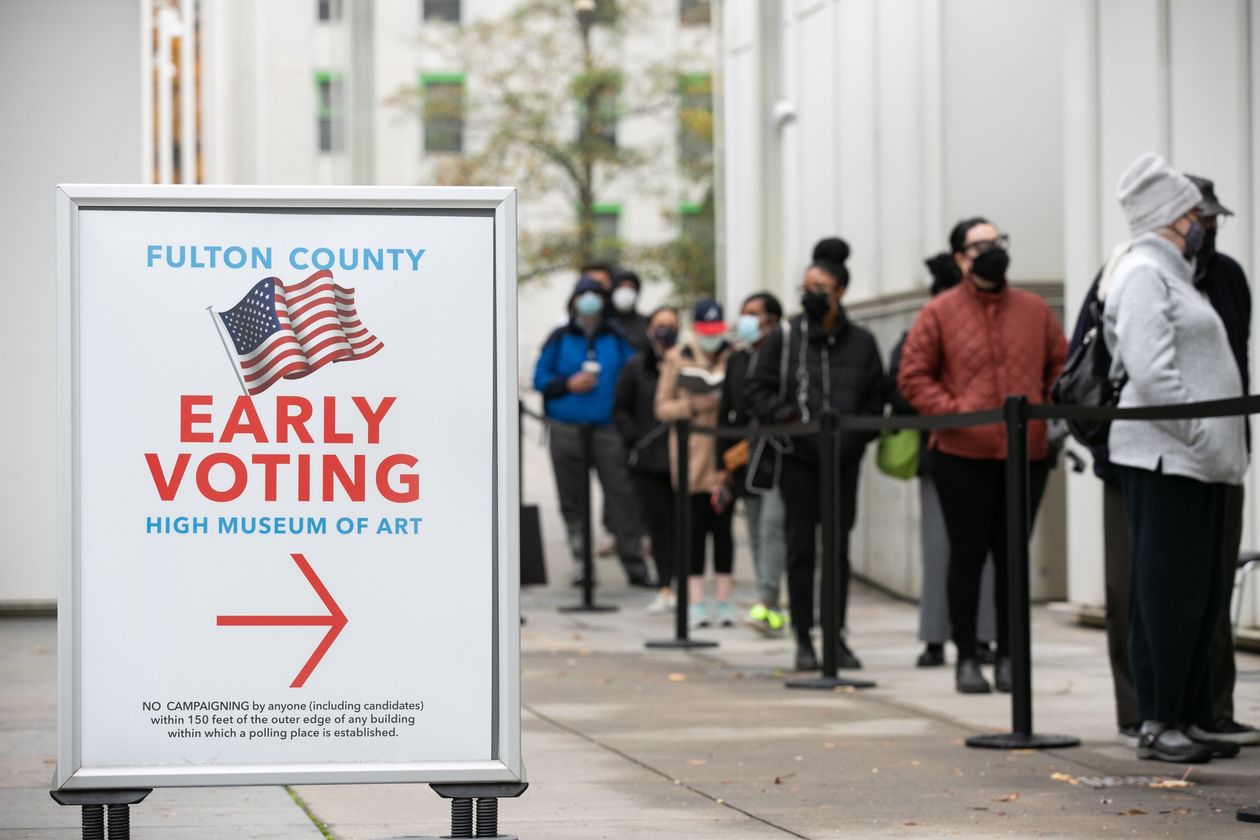 On April 3, 2021, the Georgia General Assembly passed the Election Integrity Act of 2021. This new voting law enacts sweeping changes to Georgia’s election system which could have significant implications for the outcome of future elections. Republicans in Georgia and across the United States have hailed the law as a vital and necessary reform to enhance the security of elections, with similar measures coming before legislatures in Arizona, Florida, Iowa, and Texas.1 Democrats, including President Joe Biden and Georgia voting activist Stacey Abrams, have described the law as modern day Jim Crow, invoking the obstacles put in place prior to the Voting Rights Act of 1965 to prevent people of color from voting throughout the American South.2,3
 Last month, nearly 19,000 unaccompanied migrant children were stopped at the U.S.-Mexican border, a record since documentation began in 2010, beating a previous record set in May of 2019.1 Currently, the Biden administration is allowing only children traveling alone to stay in the U.S. while their asylum claims are being evaluated, a process that can take up to five years due to the large backlog of cases.2 Apprehended adults, even those claiming asylum, are being turned away under Title 42, a Centers for Disease Control policy that was implemented last year in order to reduce the spread of COVID-19.3
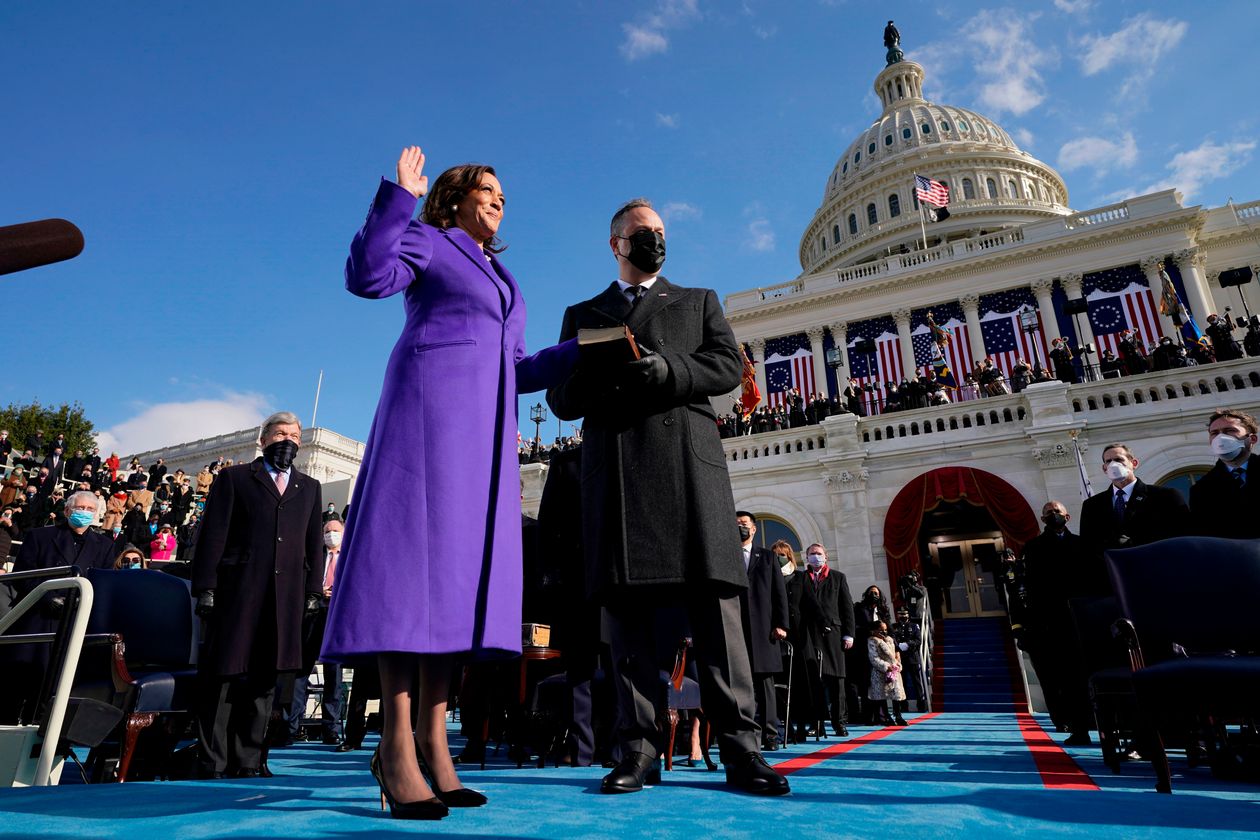 The year 2021 has already been a ground-breaking one for women in national politics. Vice President Kamala Harris became the first woman and person of color to hold the office, the 117th Congress includes the largest number of female members in U.S. history, and President Joe Biden’s cabinet will ultimately include 11 women, setting a new record. The number of women in the cabinet is particularly noteworthy; with 13 men making up the rest of the cabinet, the positions are almost evenly split (although among the heads of the executive departments, there are five women and ten men).1 During this Women’s History Month, just over 100 years since women had their right to vote ratified in the Constitution, the continued expansion of the role of women in government is worth celebrating.
 Congress passed the 26th Amendment in March 1971; it was ratified by the states and signed by President Richard Nixon by July of that same year.1 The amendment lowered the voting age to 18. It reads:

 The past several election cycles have seen high-stakes fights over access to the ballot and the rules that govern elections. In 2013, the Supreme Court invalidated provisions of the Voting Rights Act, thus making it easier for states to change their voting laws.1 In the years since, conservatives in Congress and in state legislatures have argued in favor of policies that tighten voter ID requirements and voting processes.
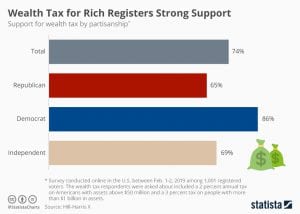
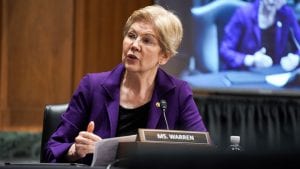 During her 2020 presidential bid, Senator Elizabeth Warren, D-Mass., put forward a tax on the wealthiest Americans—a so-called ultra-millionaire tax—as one of her central proposals.1 And on March 1, 2021, Warren introduced the Ultra-Millionaire Tax Act, which would “create an annual tax of 2 percent on the net worth of households and trusts between $50 million and $1 billion and a tax of 3 percent on net worth above $1 billion. The rate for net worth above $1 billion would increase to 6 percent if a ‘Medicare for All’ health care plan is enacted.”2