 In the face of the spreading COVID-19 pandemic, government officials and medical experts are calling on people all over the world to practice social distancing.1 In general, this means canceling events and gatherings, avoiding large groups and crowds, and, when possible, staying home.
Many people are working from home,2 schools have closed or moved online,3 and businesses such as shopping malls4 and movie theaters5 have closed their doors.
However, for some populations, social distancing is not possible. This crisis is raising questions about what to do with people who are detained or in prison. Iran has released more than 80,000 prisoners to slow the spread of COVID-19.6 Officials in the United Kingdom are considering releasing prisoners, as estimates suggest that as many as 800 inmates may die if no steps are taken.7 New Jersey is considering releasing as many as 1,000 inmates in order to curb the outbreak,8 and several local and county governments have already taken similar steps at a smaller scale.9
READ: “Prisons And Jails Change Policies To Address Coronavirus Threat Behind Bars” from NPR
Inmates in New York City—one of the areas hardest hit by the outbreak—have already tested positive for COVID-19.10 Some public health experts have argued that prisons could be a hotspot for the virus, and have urged rapid, drastic action to slow the spread.11 But some prosecutors and elected officials, concerned about community safety, have argued that governments must be cautious about releasing inmates. They argue that prisons should instead take additional measures to protect inmates, improve access to hygiene, and provide better care.12
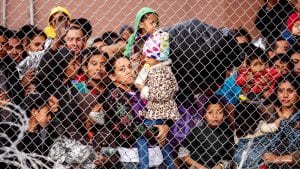
Some policymakers and advocates have also raised concerns about the nearly 40,000 people being held in Immigration and Customs Enforcement (ICE) detention centers.13 One group has filed a lawsuit asking for the release of families in three federal detention centers in Texas, alleging that the government has not taken the necessary steps to prevent a viral outbreak in the detention centers.14
Thus far, none of the people being held in the centers has tested positive for COVID-19, but one ICE employee who works in multiple centers did test positive.15 Attorneys and advocates for the detained families argue that there has been very little testing, so it is not possible to say whether or not the virus is spreading in one or more of the detention centers.16
While many citizens are rightly concerned about their own safety and the safety and health of friends and family members in these times, policymakers, elected officials, experts, and advocates are debating what to do about COVID-19 in prisons and detention centers. One big question facing decision-makers is: “Is social distancing a right?”
Discussion Questions
- Imagine being stuck in close proximity with hundreds of strangers during an outbreak. How do you think you would navigate this difficult time?
- Do you think the government should release prisoners in order to slow or prevent an outbreak? How should officials decide who to release?
- Do you think the government should release immigrant families who are being detained in order to prevent an outbreak?
- How does your answer to the two questions above relate to your overall opinions about mass incarceration and immigration?
- Do you believe that social distancing should be considered a right during this pandemic? Who else, besides prisoners and detainees, is unable to practice social distancing?
Featured Image Credit: Michael Kirby Smith, The New York Times/Redux
[1] Johns Hopkins Medicine: https://www.hopkinsmedicine.org/health/conditions-and-diseases/coronavirus/coronavirus-social-distancing-and-self-quarantine
[2] The Atlantic: https://www.theatlantic.com/ideas/archive/2020/03/coronavirus-creating-huge-stressful-experiment-working-home/607945/
[3] New York Times: https://www.nytimes.com/2020/03/12/well/family/coronavirus-school-closings-homeschooling-tweens-teens.html
[4] USA Today: https://www.usatoday.com/story/money/2020/03/18/coronavirus-mall-closings-simon-closing-malls-starting-wednesday/2867904001/
[5] The Hill: https://thehill.com/homenews/news/487972-amc-and-regal-chains-close-all-movie-theaters-amid-coronavirus-crisis
[6] Business Insider: https://www.businessinsider.com/coronavirus-covid-19-iran-releases-eighty-five-thousand-prisoners-2020-3
[7] The Guardian: https://www.theguardian.com/uk-news/2020/mar/21/prisons-could-see-800-deaths-from-coronavirus-without-protective-measures
[8] New York Times: https://www.nytimes.com/2020/03/23/nyregion/coronavirus-nj-inmates-release.html
[9] Wall Street Journal: https://www.wsj.com/articles/jails-release-prisoners-fearing-coronavirus-outbreak-11584885600
[10] ABC News: https://abcnews.go.com/US/wireStory/38-positive-coronavirus-nyc-jails-including-rikers-69731911
[11] Wall Street Journal: https://www.wsj.com/articles/jails-release-prisoners-fearing-coronavirus-outbreak-11584885600
[12] NPR: https://www.npr.org/2020/03/23/818581064/prisons-and-jails-change-policies-to-address-coronavirus-threat-behind-bars
[3] CNN: https://www.cnn.com/2020/03/19/us/coronavirus-ice-detention/index.html
[14] Philadelphia Inquirer: https://www.inquirer.com/health/coronavirus/coronavirus-covid-19-immigrants-detention-lawsuit-berks-center-20200322.html
[15]Texas Monthly: https://www.texasmonthly.com/news/ice-detention-facilities-not-prepared-coronavirus/
[16] The Marshall Project: https://www.themarshallproject.org/2020/03/19/first-ice-employee-tests-positive-for-coronavirus
 The COVID-19 (coronavirus) outbreak is believed to have started at a wildlife market in Wuhan, China, in December 2019. It is unclear which species transferred the virus to humans, but scientists largely agree on the point of origin.1 The 2002 outbreak of SARS, another type of coronavirus, began under similar circumstances.2
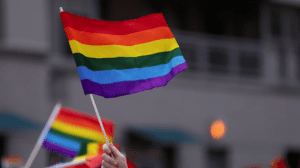 In February, Representative Ro Khanna (D-Calif.) introduced the Gender Inclusive Passport Act (H.R. 5962) in the House of Representatives. The legislation currently has 25 cosponsors, all of them Democrats.1 If the bill becomes law, it would create a third gender designation on U.S. passports—unspecified (X)—to join the existing designations of male (M) and female (F).2
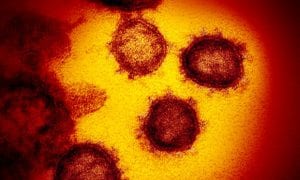 Public health officials first encountered COVID-19, popularly called the coronavirus, in Wuhan, China, in December 2019. Thus far, the virus has infected over 89,000 people, killing more than 3,000.1 In the United States, there have been more than 100 cases in 15 states; at least six people have died, all of them in Washington state.2 The Trump administration, the Centers for Disease Control and Prevention, and the World Health Organization insist that the threat of the coronavirus is still manageable, all the while taking precautions to attempt to contain the outbreak.
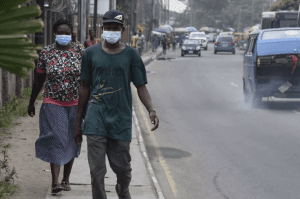 The outbreak has also raised another important equity issue: the ability to take time off work. It is recommended that people who are feeling sick or are worried that they may have been exposed to the coronavirus stay home from work or school and avoid public spaces.7 However, doing so is not always possible for hourly employees in the service industry, such as restaurant and retail workers.8 This has called attention to issues such as paid time off9 and employment security.10
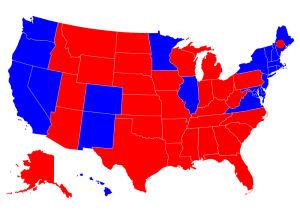 During campaigns and elections, candidates use political labels, such as liberal, moderate, progressive, conservative, and libertarian, to position themselves in relation to each other and as a shorthand for their worldviews and policy preferences. This presidential election cycle features candidates from across a wider political spectrum than most elections in recent years.
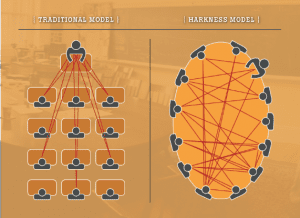 A Brief Introduction to The Harkness Method1