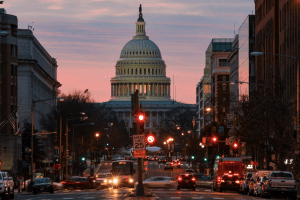
 The 117th Congress was sworn in on January 3, 2021.1 This is the most diverse Congress ever,2 with a record number of women and LGBTQ members, a slim Democratic majority in the House, and a Senate that is still up for grabs due to runoff elections taking place this week in Georgia.3
READ MORE: “Here’s A Look at Congress’ Incoming Freshman Class,” from NPR
CClearly, the new 2021 Congress members will be busy. The Senate will hold confirmation hearings for President-elect Joe Biden’s cabinet nominees for the first portion of the year,4 and both chambers will be consumed by legislation to respond to the COVID-19 pandemic and the economic harm it is causing.5
In a new Congress, no old business from the previous Congress is carried over. So, any bills that were introduced in the 116th Congress but did not pass must be introduced again if they are to be considered. It is not always clear which issues a new Congress will prioritize, but there are some signs that the 2021 Congress members will take up legislation to create jobs and to address environmental issues.
Lawmakers introduced several bills in the second half of 2020 to do just that. One bill, the 21st Century Civilian Conservation Corps Act, aims to help rural areas by employing people to plant trees, engage in forest and rangeland management, and clean up waterways.6 A second bill, the RENEW Conservation Corps Act, is similar but more all-encompassing, focusing on urban and suburban greenspaces as well as rural communities.7
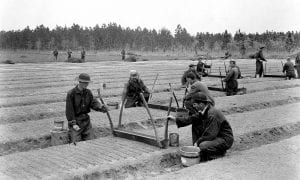
Both bills draw on ideas from the New Deal, specifically the Civilian Conservation Corps (CCC), which began in 1933, ran until 1943, and employed over three million people in that ten-year span.8 On his campaign website, President-elect Biden endorses this approach, calling for a Civilian Climate Corps to “put a new, diverse generation of patriotic Americans to work conserving our public lands, bolstering community resilience, and addressing the changing climate, while putting good-paying union jobs within reach for more Americans, including women and people of color.”9
“This bill is a straightforward approach to creating one million jobs that can address maintenance and restoration of our greatest natural resources and recreation areas,” said Senator Dick Durbin, D-Ill., on behalf of his bill, the RENEW Conservation Corps Act. “This is an investment to protect the beauty of America’s natural treasures. If we are to leave these natural gifts to the next generation, we have to take responsibility in protecting them.”10
Representative Marcy Kaptur, D-Ohio, said of a similar bill, “Members of the 21st Century CCC will engage in the prevention of forest fires, floods, and soil erosion; reforestation and eradication of invasive species and flora disease control; and modernize, redesign, and construct trails and facilities throughout our nation’s natural spaces. This is a commonsense proposal that will not only improve the lives of Ohioans, but also countless communities across the country.”11
“Rural communities are increasingly being impacted by COVID and many already have been devastated economically by the pandemic,” said Senator Cory Booker, D-N.J., a cosponsor of the 21st Century Civilian Conservation Corps Act. “Our bill will make urgent investments in rural communities at a time when they are needed most by creating new jobs and training programs, planting billions of trees, and investing in our farmers and ranchers as part of the solution to climate change.”12
While it is not clear exactly what form these Congress bill ideas will take, it does seem likely that legislation modeled on the CCC will be introduced and will have the support of Democratic leadership and the newly inaugurated president.
Discussion Questions
- Do you support programs such as these that would put Americans directly to work on large-scale government projects? Why or why not?
- Do you think the government has a role to play in combating unemployment? What about conserving natural landscapes? Why or why not?
- How highly would you rank each of the following priorities?
- Reducing unemployment
- Stimulating the economy
- Conserving nature
- Economic development in rural communities
- Combating climate change
Further Reading:
- Yes! Magazine: “Biden Needs to Go Big to Rebuild America”
- Washington Post: “Young People Want to Do Something About Climate Change. Biden May Have an Answer”
- Bloomberg News: “Biden Shows He Gets it On Clean Energy”
Extension Activities:
- Students could call the Capitol switchboard phone number – (202) 224-3121 – or write their members of Congress to voice support or opposition to these ideas.
- Students could research how the various bills would impact their communities. Questions to begin inquiry include:
- How is my community contributing to climate change?
- How is climate change impacting my community?
- In what ways are environmental features of my community threatened? (i.e., deforestation, agricultural runoff, industrial pollution)
- How has the pandemic impacted my community’s economy?
- Students could conduct historical research about the CCC. Questions to begin inquiry include:
- How did the CCC impact economic issues during the Great Depression?
- How did the CCC impact the nation’s environment?
- How did the CCC impact my part of the country?
Featured Image Credit: Tasos Katopodis/Getty Images
[1] Politico: https://www.politico.com/news/2021/01/03/new-congress-begins-coronavirus-453060
[2] USA Today: https://www.usatoday.com/story/news/politics/2021/01/03/congress-house-senate-members-sworn-covid-19-rages/6410063002/
[3] Los Angeles Times: https://www.latimes.com/politics/story/2021-01-03/house-democrats-small-majority-nancy-pelosi-challenges
[4] CNN: https://www.cnn.com/2020/12/22/politics/biden-cabinet-confirmation-senate-republicans/index.html
[5] Washington Post: https://www.washingtonpost.com/politics/2021/01/02/new-congress-live-updates/
[6] Senator Ron Wyden’s Official Website: https://www.wyden.senate.gov/news/press-releases/as-congress-negotiates-covid-19-relief-wyden-and-booker-lead-call-for-federal-support-for-rural-economies
[7] Congress.gov: https://www.congress.gov/bill/116th-congress/senate-bill/4538/text?r=1&s=1
[8] Congressional Research Service: https://www.everycrsreport.com/files/2020-09-03_R46513_42fae608f0b18de022fe5d96ab7200d21dbf5603.pdf
[9] whitehouse.gov: https://www.whitehouse.gov/briefing-room/statements-releases/2023/04/20/fact-sheet-president-biden-to-catalyze-global-climate-action-through-the-major-economies-forum-on-energy-and-climate/#:~:text=President%20Biden%20has%20set%20an,by%20no%20later%20than%202050
[10] WTTW News (PBS Affiliate): https://news.wttw.com/2020/09/11/proposed-21st-century-civilian-conservation-corps-could-benefit-chicago-s-economy
[11] Representative Marcy Kaptur’s Official Website: https://kaptur.house.gov/media-center/press-releases/kaptur-introduces-legislation-reestablish-civilian-conservation-corps
[12] Senator Ron Wyden’s Official Website: https://www.wyden.senate.gov/news/press-releases/as-congress-negotiates-covid-19-relief-wyden-and-booker-lead-call-for-federal-support-for-rural-economies
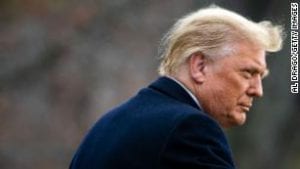 As journalists, historians, and political commentators reflect on the administration of outgoing President Donald Trump, one word keeps coming up: norms. To his critics, this is cause for concern. But President Trump’s supporters sometimes see his norm-breaking actions as efforts to change the political culture of Washington. Here, we will offer definitions and examples of political norms, rules, and traditions that President Trump has broken, consider the possible consequences, and ask what, if anything, should be done to reaffirm those norms.
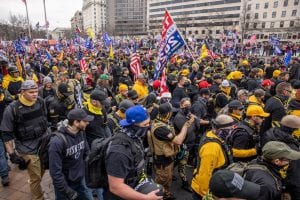 Most Republicans in the House of Representatives signed letters of support for a lawsuit brought by the state of Texas, although Senate Republicans did not.11 Some Trump supporters have latched on to the president’s defiance as well. They note that in the 2000 presidential election, Vice President Al Gore waited to concede to Governor George W. Bush until December 13, the day after the Supreme Court ordered a stop to the recount in Florida. On December 12, groups supporting President Trump, including the male chauvinist organization Proud Boys, clashed with protesters in Washington, D.C.; at least four people were stabbed (the political allegiances of both the stabbing suspect and the victims is presently unknown).12 Several Black churches were also targeted and vandalized.13
 Public health officials are offering good long-term news about the prospects of making a COVID-19 vaccine widely available during the first half of next year,1 but they are also cautioning Americans that this winter could be very “rough.”2 In addition to having worries about illness, death, and social isolation, many people are also feeling significant financial pain.3
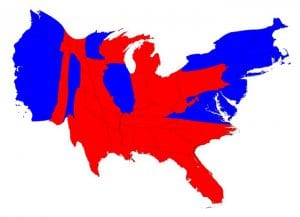 What is the Electoral College?
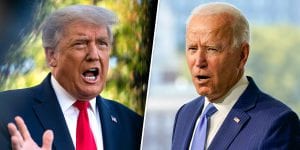 There are three presidential debates scheduled for September 29, October 15, and October 22, as well as a vice presidential debate taking place on October 7. For many voters, the debates are the best chance to see the differences between the candidates as they decide how to cast their vote in November. Campaigns put a lot of effort into the debates; getting a candidate ready for these events often requires weeks of preparation.
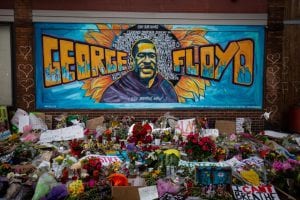 This summer has been more dramatic and more tumultuous than any other in recent memory. To help teachers and students explore key issues from this summer, we have done a series of summer round-up articles including developments related to the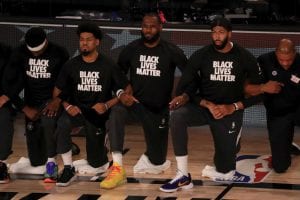
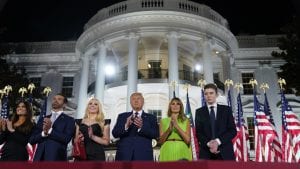
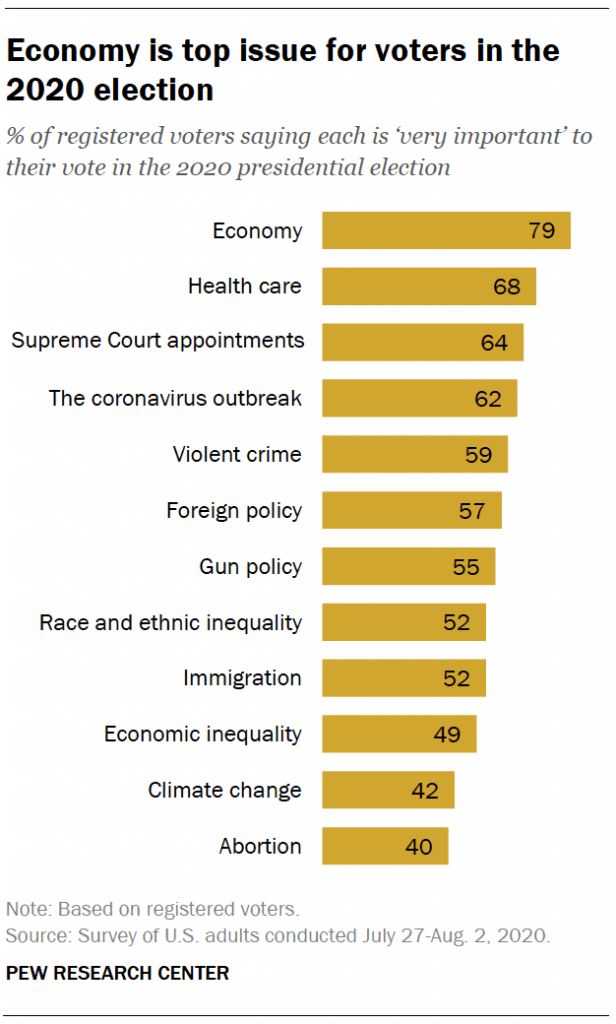
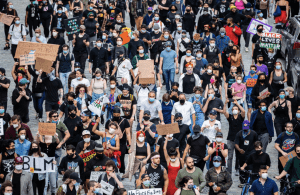 The summer of 2020 has been unlike any other. Schools across the country did not finish the end of the academic year in person, and many will not be seeing students in person once again this fall. Major events have been canceled or moved online, and we are in the midst of a presidential election that looks quite different from previous elections. On top of all the changes brought by COVID-19, the killing of George Floyd at the hands of police in May sparked protests across the country and around the world. In our first blog posts of the 2020-2021 school year, we will look back at key social and political issues from the summer so we may look ahead to the November election and beyond.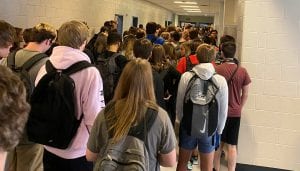
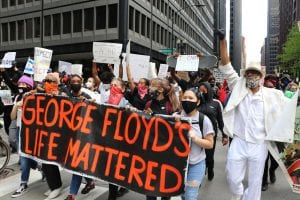 On Monday, May 25, a Minneapolis police officer named Derek Chauvin killed George Floyd by kneeling on his neck for over eight minutes.1 The next day, video of the killing went viral; by the end of the day, large groups had begun protesting in Minneapolis. In the week since, protests have spread to many major cities across the country, and some protests have had destructive consequences.2 It is not always clear who starts the violence and vandalism,3 and there is evidence to suggest that responses from the police are making the violence worse.4 In many ways, the scenes mirror the origins of the Black Lives Matter movement in Ferguson, Missouri, in 2014—another time when police efforts to respond to protests were met with, or perhaps sparked, violence.5