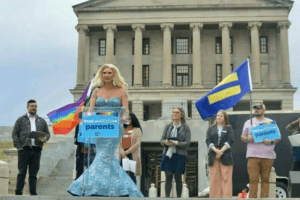
Last month, Tennessee Governor Bill Lee signed a first-of-its-kind law banning “adult cabaret entertainment” on public property or in any location where people under 18 could be present.
Senate Bill 3, commonly known as the “drag ban,” in part defines these performances as “male or female impersonators who provide entertainment that appeals to a prurient interest, or similar entertainers.”1 The law calls for first-time offenders to be charged with misdemeanors with subsequent offenses classified as felonies that could result in prison sentences of up to six years. The Republican-controlled Tennessee Senate passed the ban into law on March 2 with the intention for it to go into effect on April 1. The law was halted by a federal judge hours before it was to go into effect using a temporary restraining order, citing constitutional protections of freedom of speech.2
The drag ban has become a national conversation, with opponents of the law criticizing it for targeting the LGBTQ+ community. It follows several other issues considered by Governor Lee over the last couple of months, including prohibiting transgender Tennesseans from changing the gender listed on their driver’s license and prohibiting referrals for children to receive gender-affirming care in the state.3 Those opposed to the law are concerned that it is too vague in its definitions of what constitutes a “drag” impersonation and how to discern a location where a minor may be present. Both the American Civil Liberties Union and the Human Rights Campaign have expressed concerns that the law gives too much power to law enforcement to interpret the drag ban as they choose and potentially target transgender and gender-nonconforming entertainers performing in public.4
Members of the drag community argue that drag performances are much like any other form of entertainment. They say that just as some movies or comedy shows are appropriate for children and some are not, there are drag performances made appropriate for children and performances intended for adults. Performers are worried that authorities will not bother to discern the difference or will abuse the law in an effort to ban all drag performances.
State Senate Majority Leader Jack Johnson, a sponsor of the drag ban bill, argued on Twitter, “The bill gives confidence to parents that they can take their kids to a public or private show and will not be blindsided by a sexualized performance.”5 He continued, “We’re protecting kids and families and parents who want to be able to take their kids to public places. We’re not attacking anyone or targeting anyone.”6 While his sentiments were supported by most Republican legislators, Judge Thomas Parker—who ordered the temporary halt on the Tennessee drag ban and a Republican himself—felt the law was an overreach of government authority.
Regina Lambert Hillman, a professor of law at the University of Memphis, assured that the ban cannot prevent transgender persons from dressing as they choose in public. She explained in an essay, “You still have First Amendment protections, what that means is how a person dresses or what a person says, that does not change. The government cannot suppress speech, including expressive conduct, just because they find it offensive or they don’t like the content.”7
Though this law is the first of its kind passed, 14 other states have introduced similar legislation this year. Experts see this legislation as a coming trend that will likely cause similar conversations about whether it’s a First Amendment violation, LGBTQ+ rights, and how a law like this could be enforced. Meanwhile, the courts will be tasked with determining whether such laws are constitutional.
READ the full bill summary here.
Discussion Questions
- Is it the responsibility of the government to censor entertainment for children, or should that responsibility be placed upon parents?
- How are different values, such as equality, liberty, and justice, at play here? What other values, such as tradition or order, might also be relevant?
- Would you support a law such as this in your state or community? Why or why not?
- Is this ban a violation of the First Amendment? Why or why not?
Other Resources
- Map of other LGBTQ+ related laws being considered and criticized by the ACLU.
- Reports by the Gay & Lesbian Alliance Against Defamation (GLAAD) on drag events in 2022 that were protested or threatened.
- Republicans Lawmakers Are Trying To Ban Drag. First They Have To Define It, from FiveThirtyEight.
Related Posts
- The Supreme Court Weighs the First Amendment and Minority Rights
- LGBTQ Youth: Who Decides What Is Age-Appropriate?
- Close Up Conversation (Video) LGBTQ Equality – Past, Present & the Election
As always, we encourage you to join the discussion with your comments or questions below.
Sources
 The United States lacks public restrooms. It’s a problem you might only notice when you need to go. Those with chronic conditions such as gastrointestinal disorders, parents with young kids, and older Americans with weaker bladders may be most affected by this shortage, though anyone who just drank a large iced coffee can find themselves in need of—and struggling to find—a bathroom.
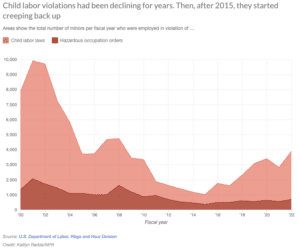 On February 27, two days after the New York Times report, President Joe Biden’s administration unveiled several policies that will be implemented to address the nearly 70 percent rise in child labor violations that has taken place from 2018-2022.11 The plan includes the creation of a new task force, targeting industries that have a history of violations, and advocating for heavier penalties and more funding for oversight.12 Congressional Democrats largely support the White House proposal. Republicans, meanwhile, say the Department of Health and Human Services is to blame for the child labor crisis because the Biden administration has loosened regulations regarding the support of migrant children.13 One third of migrant children who have been recorded by HHS now cannot be reached by government officials.14
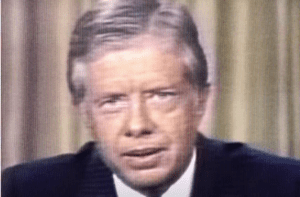 On February 18, the Carter Center released a statement saying that former President Jimmy Carter had opted to spend “his remaining time at home” following a number of hospital stays and declining health.1 News of the 98-year-old former president’s condition has brought an outpouring of support and renewed attention to his life and legacy as the 39th president of the United States. President Carter’s “Crisis of Confidence” speech is perhaps his most famous, and its words are still relevant for our country today.2
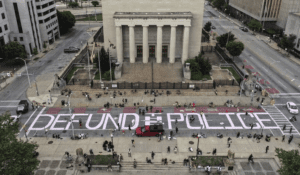 Following the 2020 murder of George Floyd by Minneapolis police officer Derek Chauvin, a call by activists to “defund the police” achieved national attention. Supporters of defunding the police have argued that—at least some of—the billions of dollars spent on policing each year could be better used by investing in educational, recreational, and mental health programs, among others, in an effort to reduce crime and increase community well-being more generally. With the release of footage showing multiple officers pepper-spraying, kicking, and punching Tyre Nichols—leading to his death three days later—questions of whether and how to reduce police budgets have been brought back into the national conversation.1
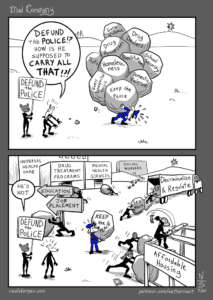 This is what many activists mean when they call for the police to be defunded. Reduce the number of responsibilities we ask of the police, decrease police budgets to match the reduced size of the police force, and use the diverted funds to invest in programs and staff who are trained to address mental health crises, struggling schools, and other social issues.
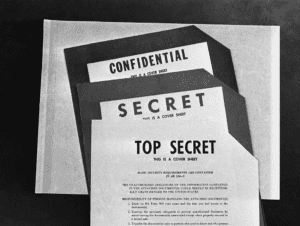 The handling of sensitive information has become a headline-grabbing issue in recent months owed to the discovery of classified documents at the homes and offices of former President Donald Trump, President Joe Biden, and former Vice President Mike Pence. The political consequences of any judgment of wrongdoing on behalf of former President Trump, President Biden, and/or former Vice President Pence have introduced significant controversy into the national discussion of this issue. In light of this controversy, Attorney General Merrick Garland has established a special prosecutor for the Trump and Biden cases, who will work independently of the Department of Justice to determine whether any criminal conduct took place. Although a special prosecutor has not yet been appointed to investigate the Pence case, many experts see this as highly likely.1
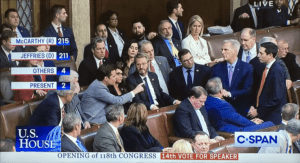 When the 118th Congress convened on January 3, what is usually a quick procedural vote for speaker turned into a contentious five days of voting on the floor of the House of Representatives.1 The frustrations, negotiations, and heated debates were on display on C-SPAN. Since the House could not adopt rules without a speaker—members-elect could not even take their oaths of office—C-SPAN cameras had a period of unprecedented access to roam the chamber, using three cameras to broadcast the proceedings without the usual constraints of House rules.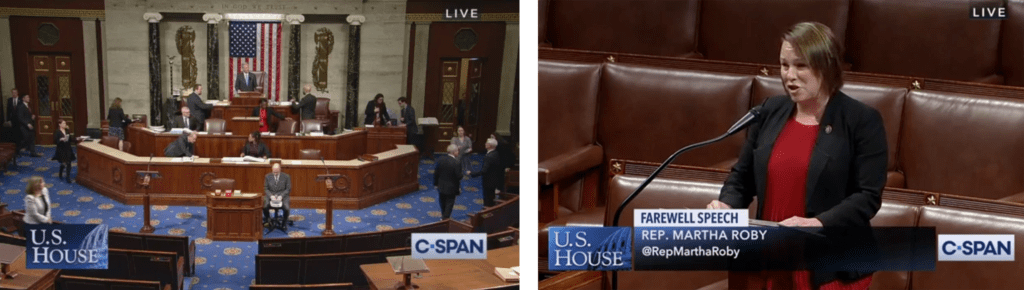
 An under-the-radar rule change proposed by Democrats in the House of Representatives in the waning days of 117th Congress could potentially increase members’ yearly compensation. The provision, approved by the House Administration Committee, would allow reimbursement for a number of living expenses, including lodging, food, and travel in Washington, D.C.









:quality(70):focal(-5x-5:5x5)/cloudfront-us-east-1.images.arcpublishing.com/tronc/SIJQXXACO5DMDCIEFARWLIWJ2U.jpg)