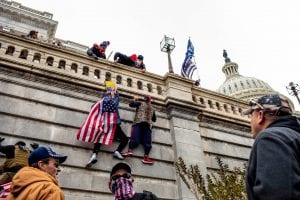
 On January 6, 2021, Congress convened to certify the Electoral College results of the 2020 presidential election and to affirm the victory of President-elect Joe Biden. Although there has been no evidence of voter fraud, a group of Republican legislators planned to object to the certification process, saying they wanted Congress first to create an electoral commission to investigate the results in certain states. This objection would not stop the certification, only delay it.1
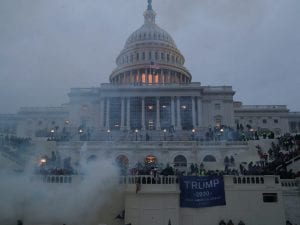
As the Senate and the House of Representatives deliberated about the objection to certifying Arizona’s election results, a group of rioting supporters of President Donald Trump breached the Capitol, easily getting past the small U.S. Capitol Police presence.2 Members of Congress and Vice President Mike Pence evacuated to an undisclosed location while rioters walked the halls of Congress, vandalized Speaker of the House Nancy Pelosi’s office, and damaged personal and public property.3 One rioter was shot by a police officer and later died; three other rioters died from medical issues during the riot.4 One police officer, Brian Sicknick, died Thursday from injuries sustained during the assault.5
The stunning scenes on our televisions, computers, and phones left us with many questions and few answers. Congress was able to resume its business and certify the election results hours later, but the four-hour period in which rioters stormed the Capitol will leave an indelible mark on our nation.6 Here, we share some of the questions we are asking, as well as links to news coverage and analysis that might help teachers and students grapple with the same questions.
How Did We Get Here?
- The New York Times editorial board argues, “Trump Is to Blame for Capitol Attack”
- The Washington Post reports, “Democrats, Republicans Blame Trump for Inciting ‘Coup’ as Mob Storms Capitol,” while Fox News notes, “Republicans Blame Trump after His Supporters Storm Capitol: ‘Enough is Enough’”
- The editors of National Review, in “Trump’s New Low,” single out Senators Ted Cruz, R-Texas, and Josh Hawley, R-Mo., for “feeding the delusion” that Congress could reject the electoral results
What Happened?
Different media outlets, commentators, and political figures are using different language to label the actions that took place.
- The Wall Street Journal editorial board calls the riot “The Disgrace on Capitol Hill”
- George Will, a conservative columnist for the Washington Post, writes, “Trump, Hawley, and Cruz Will Each Wear the Scarlet ‘S’ of a Seditionist”
- The Washington Post reports, “What Happened at the Capitol ‘Was Domestic Terrorism,’ Lawmakers and Experts Say”
- According to Mark Sullivan at Fast Company, “The Media is Wrestling with What to Call Trumpists Who Invaded the Capitol”
What Might Come Next?
The inauguration of President-elect Biden will take place on January 20. Some are worried about what might happen between now and then.
- Speaker Pelosi and Senate Minority Leader Chuck Schumer, D-N.Y., have called on Vice President Pence to invoke the 25th Amendment to remove President Trump from office (Fox News).
- Some of President Trump’s cabinet members are reportedly considering using the 25th Amendment as well (ABC News).
- Bret Stephens of the New York Times has called on Congress to “Impeach and Convict Trump. Right Now.”
- Officials in Washington, D.C., are making preparations to respond to any possible violence in the days ahead of the inauguration (Fox 5 DC).
Why Was Security So Light?
It was relatively easy for rioters to breach the Capitol building, and security remained light even as protests around the city grew.
- The New York Times reports on the criticism of law enforcement, and the Wall Street Journal reports on the lack of preparedness by the U.S. Capitol Police. Meanwhile, the head of the U.S. Capitol Police defended the response (AP).
- The Washington Post reports, “Kid Glove Treatment of Pro-Trump Mob Contrasts with Strong-Arm Police Tactics Against Black Lives Matter, Activists Say.”
Some Other Resources That May Be Helpful
- “Responding to the Insurrection at the U.S. Capitol,” from Facing History and Ourselves
- “Resources for Teachers on the Days after the Attack on the U.S. Capitol,” from Beyond the Stoplight
Featured Image Credit: Jason Andrews/New York Times
[1] NBC News: https://www.nbcnews.com/politics/2020-election/gop-senators-threaten-object-electoral-college-results-if-commission-not-n1252667
[2] USA Today: https://www.usatoday.com/story/news/nation/2021/01/06/capitol-hill-riot-heres-everything-we-know/6573033002/; CNN: https://www.cnn.com/2021/01/06/politics/us-capitol-lockdown/index.html
[3] The Hill: https://thehill.com/homenews/house/532969-pelosis-office-vandalized-after-pro-trump-rioters-storm-capitol; Business Insider: https://www.businessinsider.com/photos-show-the-aftermath-of-a-siege-on-capitol-building-2021-1
[4] CBS News: https://www.cbsnews.com/news/trump-supporters-us-capitol-4-dead/
[5] NBC News: https://www.nbcnews.com/politics/politics-news/capitol-police-officer-has-died-after-clashing-pro-trump-mob-n1253396
[6] USA Today: https://www.usatoday.com/story/news/politics/2021/01/07/watch-pence-certify-biden-harris-election-results-after-capitol-riot/6578507002/
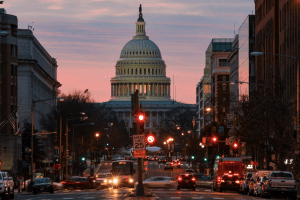 The 117th Congress was sworn in on January 3, 2021.1 This is the most diverse Congress ever,2 with a record number of women and LGBTQ members, a slim Democratic majority in the House, and a Senate that is still up for grabs due to runoff elections taking place this week in Georgia.3
 As journalists, historians, and political commentators reflect on the administration of outgoing President Donald Trump, one word keeps coming up: norms. To his critics, this is cause for concern. But President Trump’s supporters sometimes see his norm-breaking actions as efforts to change the political culture of Washington. Here, we will offer definitions and examples of political norms, rules, and traditions that President Trump has broken, consider the possible consequences, and ask what, if anything, should be done to reaffirm those norms.
 Most Republicans in the House of Representatives signed letters of support for a lawsuit brought by the state of Texas, although Senate Republicans did not.11 Some Trump supporters have latched on to the president’s defiance as well. They note that in the 2000 presidential election, Vice President Al Gore waited to concede to Governor George W. Bush until December 13, the day after the Supreme Court ordered a stop to the recount in Florida. On December 12, groups supporting President Trump, including the male chauvinist organization Proud Boys, clashed with protesters in Washington, D.C.; at least four people were stabbed (the political allegiances of both the stabbing suspect and the victims is presently unknown).12 Several Black churches were also targeted and vandalized.13
 Public health officials are offering good long-term news about the prospects of making a COVID-19 vaccine widely available during the first half of next year,1 but they are also cautioning Americans that this winter could be very “rough.”2 In addition to having worries about illness, death, and social isolation, many people are also feeling significant financial pain.3