Build It and They Will Come: The Biden Infrastructure Plan

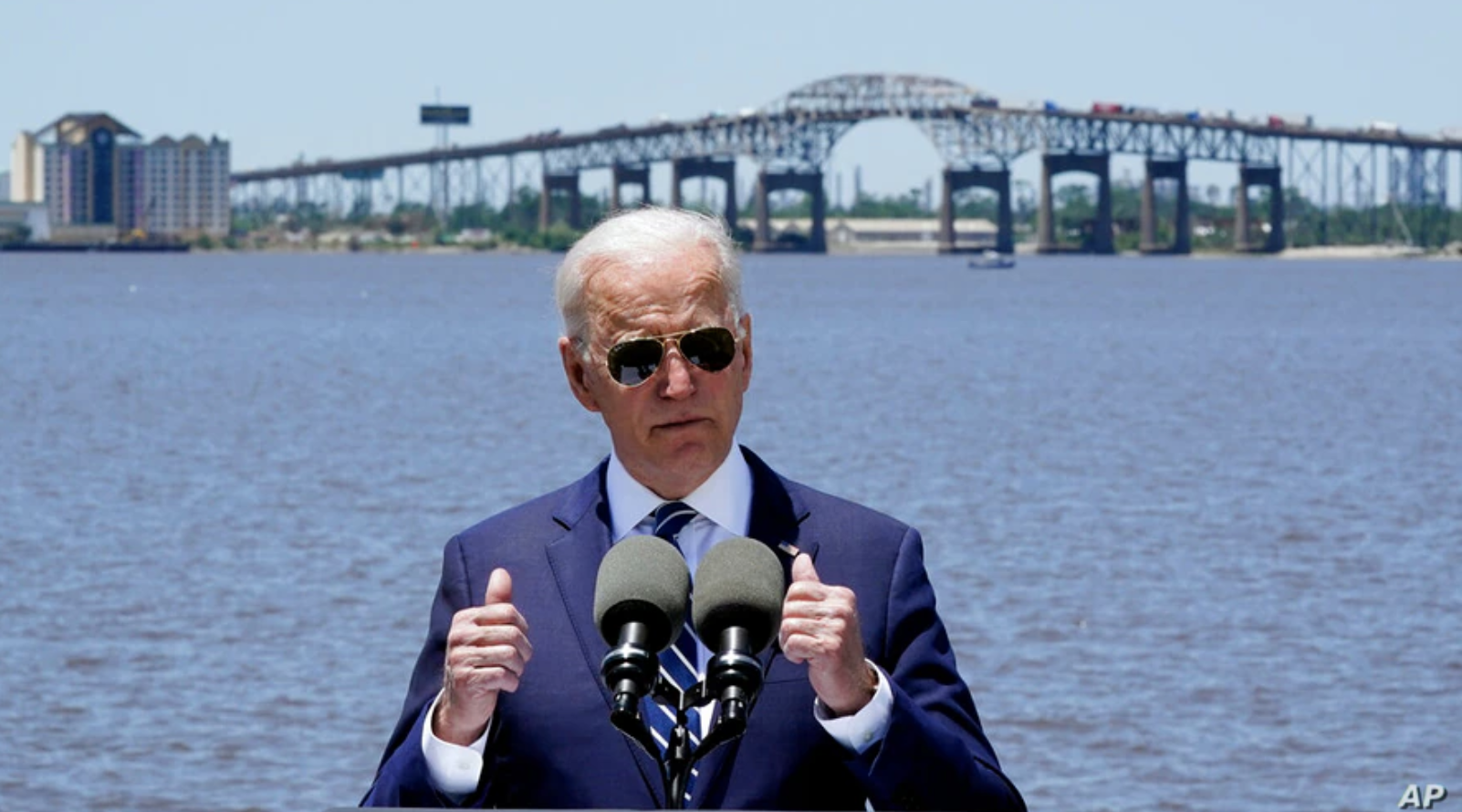
Alex Brandon/AP ImagesPresident Joe Biden is currently campaigning to promote his administration’s infrastructure plan. The plan is intended to address three main areas of concern: crumbling or inadequate infrastructure, job creation and economic growth, and environmental issues. In this post, we will focus on the infrastructure goals of the plan.

What is Infrastructure?

Infrastructure refers to the basic facilities and structures that allow a community or nation to function. It can include transportation, energy and power, basic resources such as water, telecommunications (phones and internet access), and waste removal and management. While talking about infrastructure often conjures images of rebuilding old bridges and adding new highways, it also includes other less “tangible” structures such as broadband access.

What is in the Biden infrastructure plan?

The plan, formally named the American Rescue Plan, would invest two trillion dollars over a fifteen-year period to rebuild or build new infrastructure, make the economy more equitable, combat climate change, and boost economic growth.1 Major infrastructure-related portions of the proposal include2:

  • 621 billion dollars for transportation, with a focus on roads, bridges, and railways.
  • 300 billion dollars towards reinvesting in U.S. manufacturing, with a focus on green energy, high tech, and medical manufacturing.
  • 213 billion dollars on affordable and energy efficient housing.
  • 111 billion dollars for water infrastructure, including replacing old pipes and removing any pipes containing lead, and upgrading sewage and water runoff systems.
  • 100 billion dollars to build or upgrade public school buildings.
  • 100 billion dollars in digital infrastructure, including providing nation-wide affordable broadband access, with a focus on rural and urban areas.

The plan also calls for raising corporate taxes to pre-2017 levels and changing tax codes to encourage large global companies to invest and produce more in the U.S.3

Hear from Representatives Eddie Bernice Johnson (D-TX) and David Rouzer (R-NC) as they discuss President Biden’s 2 trillion dollar infrastructure plan.

The Debate

Most of the debate over the infrastructure spending outlined above revolves around how much the U.S. can afford to spend and whether it is a good idea to raise taxes. Steve Scalise, a Republican member of Congress from Louisiana, called the plan a “budget-busting tax hike spending boondoggle masquerading as an infrastructure bill,” and said it would send more jobs overseas and hurt the middle class.4 Kevin McCarthy (R-Calif.) the Republican leader in the House, said the plan is too big and too expensive. He also cautioned that “the real challenge is in these great big bills there’s just waste, fraud, abuse, but more importantly corruption.”5While critics of the plan have focused on cost, Secretary of Transportation Pete Buttigieg argued that “doing nothing is what’s truly unaffordable.” He went on to say that, as infrastructure fails and the U.S. continues to fall behind other nations, the cost for addressing these issues will only grow. “We’re either going to pay now or we’re going to pay a lot more later.”6

While Congress is largely divided along party lines, the plan is finding some Republican support among governors and mayors. Nic Hunter, the Republican mayor of Lake Charles, Louisiana said, “I do believe we can agree on the dire need here in Lake Charles for an infrastructure plan that can build us a new bridge and I do believe we can agree on the dire need to support disaster relief in Southwest Louisiana…Any member of Congress out there listening: Lake Charles needs help right now. And we are asking for it.”7

This is a large and complicated plan. In this post, we’ve only examined some of the largest elements of the proposal. As the proposal takes shape in Congress, the debate may become even more contentious, or there may be places where the two parties can negotiate.

Discussion Questions

  1. How would you describe the infrastructure of your community? Think of road quality, traffic, access to rail and public transportation, the state of public school buildings, and internet access, among other things.
  2. How would you prioritize infrastructure spending? Think of the specific goals outlined above.
  3. How would you advise your member of Congress to vote on this proposal? Which elements of the proposal are most important to your community? Which elements are the least important?

As always, we encourage you to join the discussion with your comments or questions below!


Sources

Featured Image Credit: Alex Brandon/AP Images
[1] WhiteHouse.gov: https://www.whitehouse.gov/briefing-room/statements-releases/2021/03/31/fact-sheet-the-american-jobs-plan/
[2] CNN.com: https://www.cnn.com/2021/03/31/politics/infrastructure-proposal-biden-explainer/index.html
[2] New York Times: https://www.nytimes.com/2021/03/31/business/economy/biden-infrastructure-plan.html
[4] AP News: https://apnews.com/article/louisiana-business-government-and-politics-462e89744cc73d2d953e1c332e36ddb9
[5] New York Post: https://nypost.com/2021/05/09/rep-mccarthy-says-no-need-to-spend-trillions-on-biden-plan/
[6] ABC News: https://abcnews.go.com/Politics/transportation-secretary-pete-buttigieg-23-trillion-infrastructure-plan/story?id=77539522
[7] AP News: https://apnews.com/article/louisiana-business-government-and-politics-462e89744cc73d2d953e1c332e36ddb9


Workers’ Rights & Teacher Unions

During this Close Up Conversations webinar, Close Up’s, Mia Charity discusses ‘Workers’ Rights & Teacher Unions’ with guest speakers Randi Weingarten, president of the American Federation of Teachers.

What are worker’s rights and teacher unions? After a year of changing our normal working lives, many workers including teachers are still navigating difficult changes to their work lives. Join us for a session with Randi Weingarten from the American Federation of Teachers to discuss current labor issues, the outlook for the coming year as we continue to recover from the COVID-19 pandemic, and the future of workers’ rights.


U.S. Foreign Policy: Pivot Towards Asia

During this Close Up Conversations webinar, Close Up’s, Joe Geraghty discusses ‘U.S. Foreign Policy: Pivot Towards Asia’ with guest speakers John J. Brandon and Shirley Keating of The Asia Foundation.

With a new Secretary of State now at the helm at the State Department and a new Commander-in-Chief in the White House, American foreign policy towards China and all of Southeast Asia is likely to change from the past four years with the Trump Administration. Join us to learn how American foreign policy towards Southeast Asia will change and how will those countries respond to those changes.


The Georgia Election Law—Election Security or Voter Suppression?

On April 3, 2021, the Georgia General Assembly passed the Election Integrity Act of 2021. This new voting law enacts sweeping changes to Georgia’s election system which could have significant implications for the outcome of future elections. Republicans in Georgia and across the United States have hailed the law as a vital and necessary reform to enhance the security of elections, with similar measures coming before legislatures in Arizona, Florida, Iowa, and Texas.1 Democrats, including President Joe Biden and Georgia voting activist Stacey Abrams, have described the law as modern day Jim Crow, invoking the obstacles put in place prior to the Voting Rights Act of 1965 to prevent people of color from voting throughout the American South.2,3

So, what exactly does the Election Integrity Act do?

Provisions of the Law

The Election Integrity Act of 2021 creates numerous changes, but some the most significant include:

  • Instead of a signature, absentee ballots will require a voter’s driver’s license number or state ID number, the last four digits of a social security number, or a photocopy of an approved alternate form of ID.
  • Ballot drop boxes will now be available in all elections but are limited to one per 100,000 voters or one per voting location (whichever is the lower number). Drop boxes will no longer be available 24/7; they must be placed inside voting locations and be accessible during operating hours only.
  • Early in-person voting has been expanded to three weeks before an election.
  • Absentee ballot request forms can no longer be sent out without being requested by individual voters.
  • The time to request an absentee ballot has been reduced from six months to three months before an election. The deadline to submit an absentee ballot has been changed from four days to 11 days before an election.
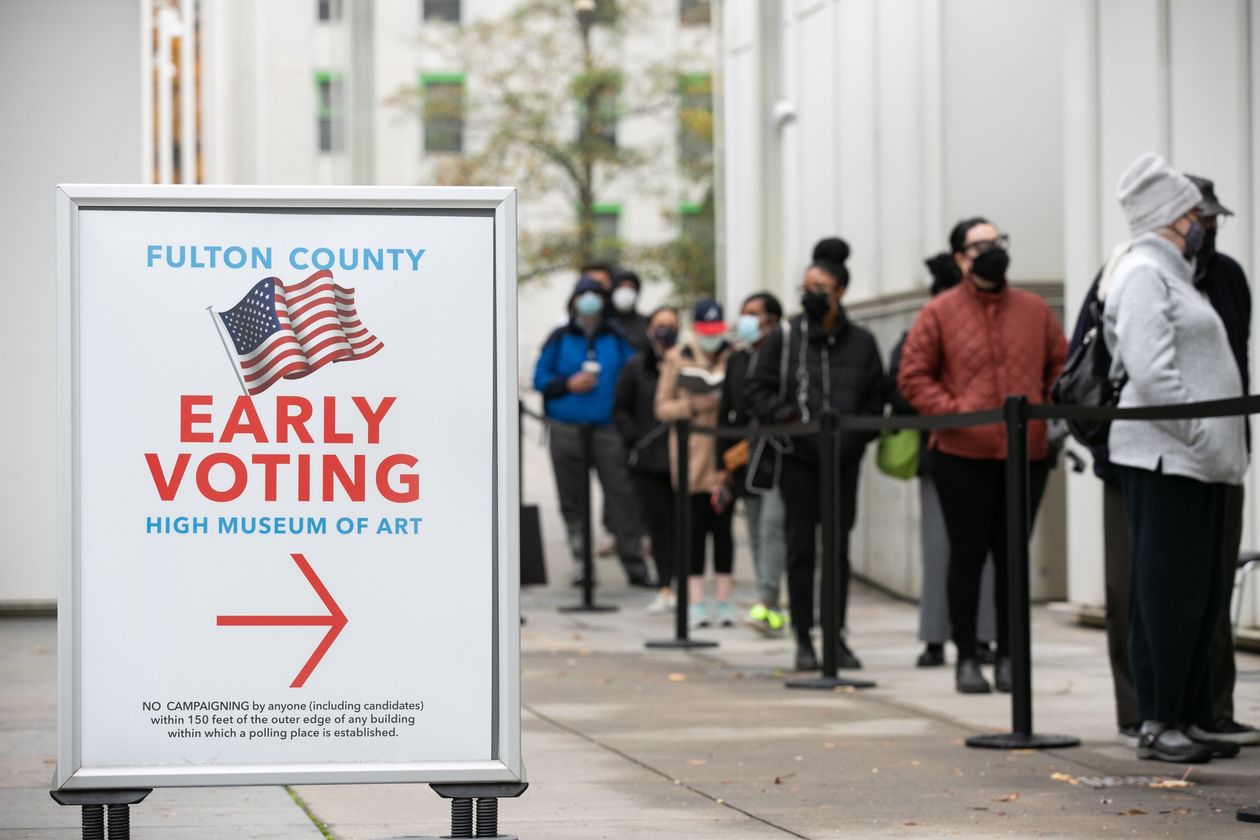
  • It is now a misdemeanor for any non-poll worker to provide food or water to anyone within 150 feet of a polling location. Poll workers may only make water available to people in line to vote if the water is not attended by a person.
  • The Georgia General Assembly will now appoint three out of five of all county election boards and have the ability to replace that board with a special administrator if they judge the board to have “poor performance.” The law revokes the ability of the secretary of state to vote on the State Board of Elections.
  • Runoff elections will now occur four weeks after the general election instead of nine weeks after the general election (which makes it impossible to register to vote between the general election and the runoff, according to current state registration deadlines).
  • The Election Integrity Act prohibits private donations to fund local elections.4

The Controversy

Proponents of the new law argue that its provisions are vital to maintaining election security, particularly in the wake of the 2020 election, which saw numerous emergency changes made to Georgia voting procedures due to social distancing requirements amid the COVID-19 pandemic.5 Supporters insist that the changes the law makes are commonsense measures, such as improving security for ballots left in drop boxes. For example, by asking voters to provide an ID number on an absentee ballot instead of signing it, supporters note that the law removes the need for the sometimes confusing process of signature verification. Supporters of the law in Georgia state government (most of whom are Republicans) also cite public mistrust of election integrity following unfounded accusations of voter fraud made by former President Donald Trump, congressional Republicans, and Georgia legislators.6

Opponents of the Election Integrity Act argue that these changes have little to do with election integrity, since thorough auditing of the Georgia elections and elections throughout the country have revealed virtually no voter fraud or significant errors.7 Instead, critics suggest that the law is a response to the record voter turnout in the 2020 election, particularly among minority populations, which played a role in President Biden’s win in Georgia as well as the upset victories of Senators Raphael Warnock, D-Ga., and Jon Ossoff, D-Ga.8 These 2020 victories for Democrats marked the first time since 1992 that Georgia went to a Democratic presidential candidate and had two Democrats in the U.S. Senate. Opponents of the law suggest that the majority Republican legislature is taking steps to ensure that fewer poor, urban, and minority voters (who overwhelmingly vote for Democrats) can easily cast ballots going forward and guarantee Republican victories at both the state and national levels.9

WATCH: Learn more about the competing arguments surrounding the Georgia voting law and other voting laws around the country by watching Georgia state Representatives Jasmine Clark (D) and Robert Dickey (R) discuss their views on ASP Explores

Discussion Questions

  1. What provisions of the law, if any, do you find reasonable? What provisions, if any, do you object to?
  2. What do you think the criteria should be for an individual to cast a vote?
  3. Do you believe that states should continue to maintain control of the elections they hold? Should there be different standards for local, state, and national elections? Should national elections be administered or regulated by the federal government instead?

As always, we encourage you to join the discussion with your comments or questions below!

Related Blog Posts:

Restoring Confidence or Destroying Democracy?

The 50th Anniversary of the 26th Amendment

Political Violence and the 2020 Election


Sources

Featured Image Credit: JESSICA MCGOWAN/GETTY IMAGES
[1] https://www.nytimes.com/2021/03/25/us/politics/georgia-voting-law-republicans.html?
[2] https://twitter.com/staceyabrams/status/1375226723239886857?lang=en
[3] https://thehill.com/homenews/administration/545135-biden-georgia-law-is-jim-crow-for-21st-century
[4] https://www.nytimes.com/2021/04/02/us/politics/georgia-voting-law-annotated.html
[5] https://apnews.com/article/what-does-new-georgia-gop-election-law-do-87665a200f6442e28ef43cbc60c88653
[6] https://www.nytimes.com/2021/03/25/us/politics/georgia-voting-law-republicans.html?
[7] https://sos.ga.gov/index.php/elections/3rd_strike_against_voter_fraud_claims_means_theyre_out_after_signature_audit_finds_no_fraud
[8] https://sos.ga.gov/index.php/elections/georgia_breaks_all-time_voting_record
[9] https://www.nytimes.com/2021/03/25/us/politics/georgia-voting-law-republicans.html?


Record Numbers of Unaccompanied Minors Are Seeking Asylum in U.S.

unaccompanied minorLast month, nearly 19,000 unaccompanied migrant children were stopped at the U.S.-Mexican border, a record since documentation began in 2010, beating a previous record set in May of 2019.1 Currently, the Biden administration is allowing only children traveling alone to stay in the U.S. while their asylum claims are being evaluated, a process that can take up to five years due to the large backlog of cases.2 Apprehended adults, even those claiming asylum, are being turned away under Title 42, a Centers for Disease Control policy that was implemented last year in order to reduce the spread of COVID-19.3
When children are found by Customs and Border Protection (CBP), they are placed in a detention center awaiting transfer to the Department of Health and Human Services (HHS) which will then place them in foster care, usually close relatives living in the U.S.4 CBP must turn over children to HHS within 72 hours, but because of the large number of children arriving and the shortage of HHS facilities, children are staying in CBP custody an average of 117 hours.5 Currently, HHS is opening several Emergency Intake Sites (EIS) along the border, in some cases taking over performance and convention centers in order to avoid crowding and adhere to COVID-19 protocols.6

The reasons for the surge of unaccompanied migrant minors attempting to cross the border are complex and debated. Eve Meade, professor at the University of San Diego states that “most immediately we have a sequence of natural disasters in Central America. And in a little bit of broader context, we have the coronavirus pandemic which has hit Central America and Mexico much worse. And then third you have this long-term security crisis in the region.”7 Critics of Biden’s administration point to his loosening of the Title 42 restrictions; under the Trump administration even unaccompanied children were sent back to Mexico.8 President Biden has responded to criticism denying that more migrants were arriving because he is “a nice guy,” reasoning that “they come because their circumstance is so bad.”9 In a March 25 press conference, Biden maintained that the high number of migrants was cyclical with increasing numbers of people finding the situation in their home nations untenable.10

In order to address the growing numbers of children, in addition to opening more HHS facilitates, the Biden administration is deploying the Federal Emergency Management Agency (FEMA) in order to help shelter and transport children. President Biden is collaborating with the Mexican government in order to start talks with several Central American governments.11 He is asking for $4 billion dollars in aid to be sent to these countries in order to address crime, poverty, and other factors driving migration, and is restarting “a program that allows certain Central American children with parents lawfully living in the United States to apply for a refugee resettlement from their home countries.”12 On March 24, he appointed Vice President Kamala Harris to lead the task force assembled to address the issue.13

Some critics of Biden’s plans have pointed to a broken immigration system that is in need of a complete overhaul. Immigration attorney, Andy J. Semotiuk, writes in Forbes, “In the end, however, what is happening at the border is part of a larger broken immigration system that is in need of reform…What is needed to address the southern border problem is a displaced persons policy similar to what America had at the end of World War II where U.S. sponsors help relieve the burden of bringing refugees into the country.”14

Although critical of Biden’s response to the record number of migrants arriving at the border, Republicans are not currently pushing for complete immigration reform because what has been seen as previous failures to address illegal immigration.15 Texas Republican Senator John Cornyn has proposed a different plan that would eliminate the “catch and release” policy that allowed children and adults in CBP custody to be released to their families in the United States while waiting for their immigration cases to be heard. He is instead advocating that immigrants and asylum seekers be processed while their cases are being heard.16 With a backlog of cases that numbers in the millions, it is unclear how that kind of speed in proceedings would be achieved.17

Discussion Questions

  1. Do you agree with President Biden’s change in the Trump administration’s policy that now allows unaccompanied minors to stay in the U.S. while awaiting their court hearings? Why or why not?
  2. Which policies presented above seem the most reasonable to enact? Why?
  3. Immigration reform is a complex policy issue that includes humanitarian, political, social, and international concerns among others. What values do you think policy makers should consider when making decisions regarding problems in our immigration system? Explain your reasoning.

As always, we encourage you to join the discussion with your comments or questions below!

Sources

Featured Image Credit: Dario Lopez-Mills – Pool/Getty Images
[1] NBC Los Angeles. https://www.nbclosangeles.com/news/local/pomona-fairplex-unaccompanied-minors-us-mexico-border-immigration/2569490/
[2] NBC News. https://www.nbcnews.com/politics/immigration/record-number-unaccompanied-children-crossed-border-march-n1262901
[3] Ibid.
[4] Associated Press. https://apnews.com/article/video-border-smugglers-drop-children-over-wall-55a52a72eb78c95600bdb33323dd7d28
[5] NPR. https://www.npr.org/2021/03/16/977853878/young-migrants-held-by-border-patrol-far-longer-than-allowed-document-shows
[6] The Grunion. https://www.gazettes.com/news/government/council-clears-use-of-long-beach-convention-center-to-house-unaccompanied-minors/article_6d0a00b2-97ab-11eb-8f34-23e6494e21cc.html
[7] NBC San Diego. https://www.nbcsandiego.com/news/local/number-of-unaccompanied-minors-crossing-border-up-64/2570830/
[8] Reuters. https://www.reuters.com/article/us-usa-immigration-children-explainer/explainer-why-more-migrant-children-are-arriving-at-the-u-s-mexico-border-idUSKBN2BA11B
[9] Ibid.
[10] USA Today. https://www.usatoday.com/story/news/politics/2021/03/25/joe-biden-defends-white-house-migrant-policy-first-press-briefing/7000476002/
[11] Time. https://time.com/5950832/unaccompanied-minors-border/
[12] Reuters. https://www.reuters.com/article/us-usa-immigration-children-explainer/explainer-why-more-migrant-children-are-arriving-at-the-u-s-mexico-border-idUSKBN2BA11B
[13] Time. https://time.com/5950832/unaccompanied-minors-border/
[14] Forbes. https://www.forbes.com/sites/andyjsemotiuk/2021/03/31/woeful-border-youth-detentions-stir-immigration-debate/
[15] Houston Chronical. https://www.houstonchronicle.com/news/houston-texas/immigration/article/Cornyn-to-introduce-bill-to-fix-surge-of-16065269.php
[16] Ibid.
[17] Ibid.


The Filibuster & Reform

During this Close Up Conversations webinar, Close Up’s, Mia Charity discusses ‘The Filibuster &. Reform’ with guest speaker Adam Jentleson.

The Senate filibuster is arguably the most popular debate in Congress right now.  Join us for a conversation with Adam Jentleson the author of Kill Switch: The Rise of the Modern Senate and the Crippling of American Democracy to discuss what the filibuster is, how it works, and what reform would mean. Jentleson is a frequent political commentator on MSNBC and guest on numerous podcasts, including NPR’s Fresh Air, The Ezra Klein show, and Why is this Happening with Chris Hayes.


Time to Reform the Filibuster?

Dealing with Filibusters

The Senate is again considering changing its rules regarding the filibuster, a parliamentary procedure that gives individual senators the power to shape—and even block—legislation. The filibuster is “a loosely defined term for action designed to prolong debate and delay or prevent a vote on a bill, resolution, amendment, or other debatable question.”1

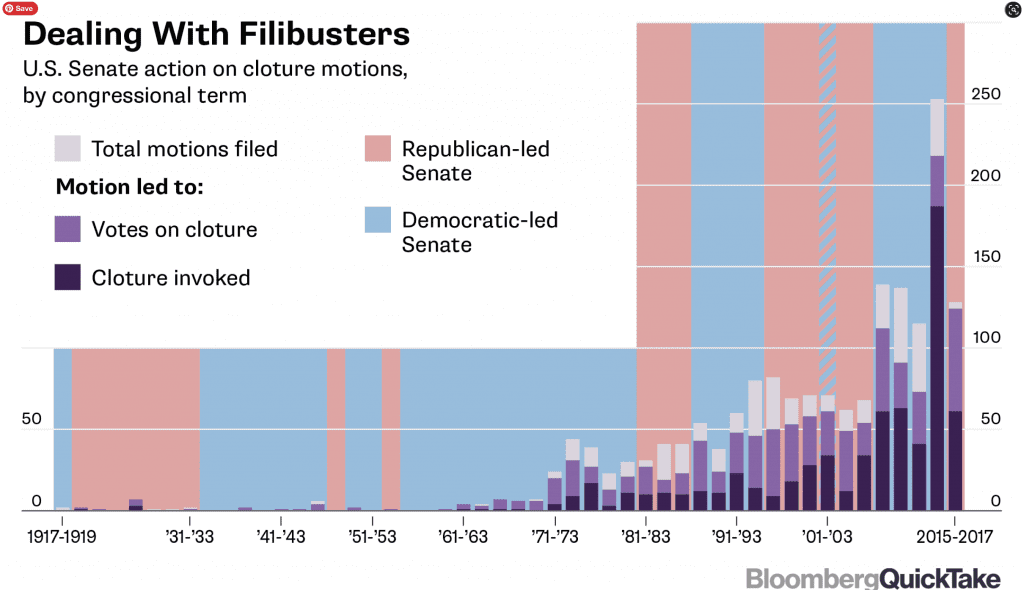
The filibuster is not in the Constitution; rather, it was an accidental byproduct of a rule change in 1806.2 In 1917, the Senate changed its rules so a filibuster could be ended by a two-thirds majority vote of senators; in 1975, the Senate lowered that threshold to three-fifths.3 Filibusters, or the threat of a filibuster, used to be rare. These days, the minority party uses the filibuster as a matter of routine, essentially creating a 60-vote threshold for most bills to pass.

Today, many Senate Democrats are considering removing the filibuster altogether, meaning that any legislation would require a simple majority vote to pass the Senate. It is not guaranteed that Democrats would be able to do this, as at least two members of their party, Senators Kyrsten Sinema, D-Ariz.,4 and Joe Manchin, D-W.V., have not endorsed filibuster reform. Almost all Senate Democrats support another position, allowing for a “talking filibuster” in which a member could hold the floor in order to delay or block a vote. Under this proposal, individual senators would have a path to make their voices heard, but not all legislation would require 60 votes to pass the Senate.

WATCH: The history of, and debate about, the filibuster, from the Washington Post

Arguments for Keeping the Filibuster

Those who want to keep the filibuster argue that this procedure empowers each individual senator to have a voice on all legislation, meaning that every state, no matter how small and no matter the party affiliation of its senators, has a say in policymaking.6 In an argument against ending the filibuster, former Senator Mike Enzi, R-Wyo., wrote that the filibuster can do as much to ensure compromise as it does to create division. He pointed out that, because of the threat of the filibuster, he and Senator Ted Kennedy, D-Mass., were able to work together to produce 38 bipartisan bills in 2005 and 2006 alone.7 Supporters of the filibuster also note that the Senate is intended to be a deliberative body that cools the passions of the House of Representatives.8 In other words, the House majority is able to act quickly—sometimes too quickly—and it is up to the Senate to weigh all matters carefully and deliberately and to build a 60-vote consensus.

Arguments for Ending the Filibuster

Advocates of ending the filibuster argue that this procedure was never intended to be commonplace, and that it was only a clerical error that allowed it to exist at all.9 Critics note that the filibuster was a rarely used tool until recent years, and that its use exploded during the administration of President Barack Obama. As such, they argue that the founders never intended the Senate to be so gridlocked.10 Some proponents of ending the filibuster argue that it has been a tool of racism and white supremacy, with Princeton historian Kevin Kruse saying “it’s been a tool used overwhelmingly by racists” to protect slavery and Jim Crow segregation.11

Discussion Questions

  1. What do you think are the strongest arguments for keeping the filibuster? What are the strongest arguments for getting rid of it?
  2. Do you support keeping the filibuster? Why or why not?
  3. How would you urge your senators to vote on this matter?

Further Reading and Resources

    • The Heritage Foundation: “The Filibuster Protects the Rights of All Senators and the American People”
    • Watch: Senator Mike Lee, R-Utah, makes the case to keep the filibuster in a Federalist Society policy brief
    • Wall Street Journal: Senate Minority Leader Mitch McConnell, R-Ky., argues that ending the filibuster would create a “scorched-earth Senate”
    • Watch: Senator Elizabeth Warren, D-Mass., argues for ending the filibuster
    • Rashad Robinson writes in USA Today and Zach Beauchamp writes on Vox.com about the filibuster and race
    • Politico: “‘They Are, in Effect, Supporting Racism’: Black Leaders Zero in on Dems’ Filibuster Holdouts”
    • Rolling Stone: “The Filibuster’s Ugly History and Why It Must Be Scrapped”
    • #CloseUpConversations: Join Close Up on Thursday, April 8, at 6 pm EST for a conversation with Adam Jentleson, the author of Kill Switch: The Rise of the Modern Senate and the Crippling of American Democracy, to discuss what the filibuster is, how it works, and what reform would mean. Jentleson is a frequent political commentator on MSNBC and a guest on numerous podcasts, including NPR’s “Fresh Air,” “The Ezra Klein Show,” and “Why Is This Happening with Chris Hayes.”

As always, we encourage you to join the discussion with your comments or questions below!

Sources

Featured Image Credit: RWT/AP
[1]. Senate.gov: https://www.senate.gov/about/powers-procedures/filibusters-cloture.htm
[2] USA Today: https://www.usatoday.com/videos/news/justthefaqs/2021/03/08/filibuster-what-how-could-affect-bidens-agenda-senate/4626598001/
[3] Senate.gov: https://www.senate.gov/about/powers-procedures/filibusters-cloture.htm
[4] National Review: https://www.nationalreview.com/news/sinema-calls-on-senators-to-change-their-behavior-instead-of-eliminating-filibuster/
[5] Vox.com: https://www.vox.com/2021/3/20/22341271/feinstein-filibuster-reform-talking-joe-manchin-kyrsten-sinema-joe-biden-senate-60-votes
[6] Politico: https://www.politico.com/story/2011/01/against-ending-the-filibuster-048019
[7] Ibid.
[8] The Heritage Foundation: https://www.heritage.org/political-process/report/the-filibuster-protects-the-rights-all-senators-and-the-american-people
[9] USA Today: https://www.usatoday.com/videos/news/justthefaqs/2021/03/08/filibuster-what-how-could-affect-bidens-agenda-senate/4626598001/
[10] Brennan Center for Justice: https://www.brennancenter.org/our-work/research-reports/case-against-filibuster
[11] Vox.com: https://www.vox.com/policy-and-politics/2021/3/25/22348308/filibuster-racism-jim-crow-mitch-mcconnell


Building Bridges – Women’s History Month – Part 2

Podcast Host: Joe Geraghty  |  Podcast Contributors: Dan Wallace, John Cheeseman, and Michael Boateng

In this episode of Building Bridges we look at some additional remarkable women in American history: Lucy Parsons, Margaret Chase Smith, and Donna Brazile. This episode will present stories of women who you have heard of, but may not know all of the history and highlights of their lives.

Part 1: Lucy Parson Story (00:59)
Part 2: Margaret Chase Smith Story (13:31)
Part 3: Donna Brazile Story (34:39)


Women: A Majority in the United States, A Minority in U.S. Government

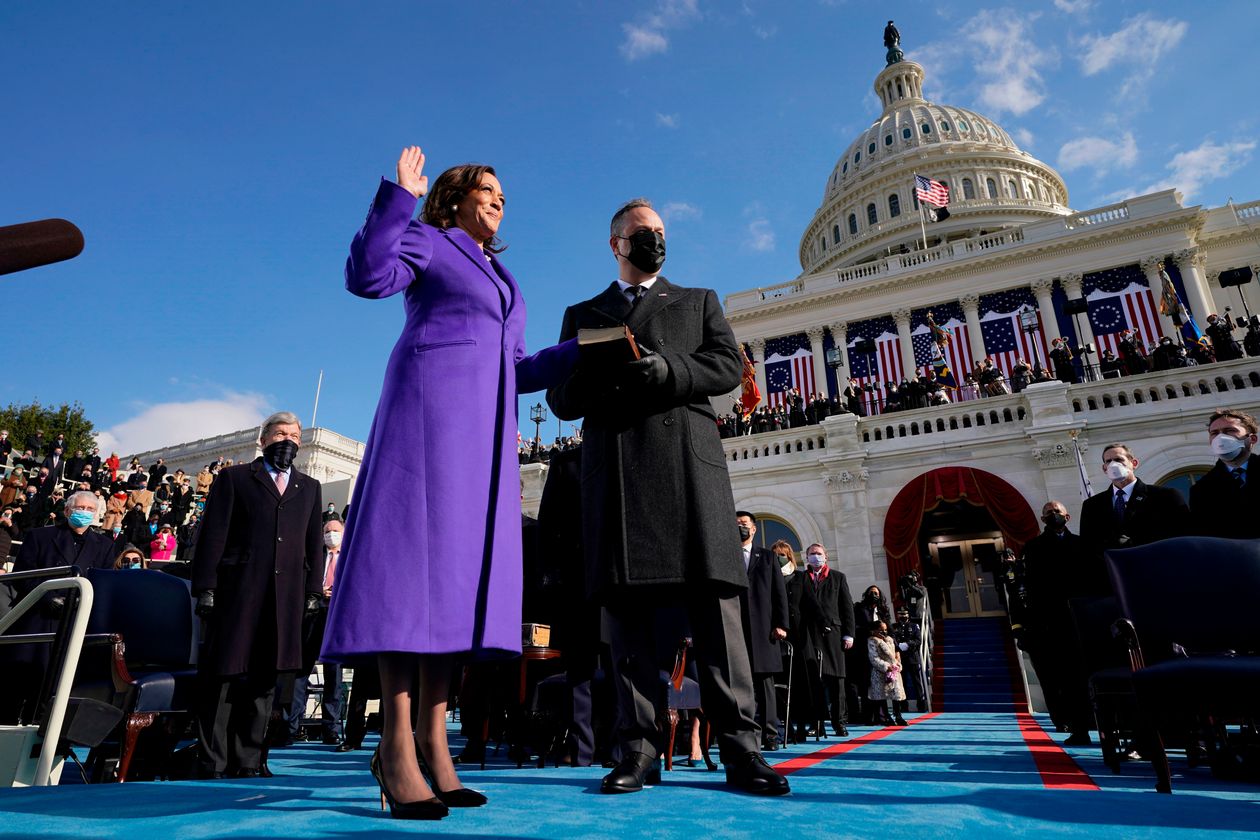
Andrew Harnik Press PoolThe year 2021 has already been a ground-breaking one for women in national politics. Vice President Kamala Harris became the first woman and person of color to hold the office, the 117th Congress includes the largest number of female members in U.S. history, and President Joe Biden’s cabinet will ultimately include 11 women, setting a new record. The number of women in the cabinet is particularly noteworthy; with 13 men making up the rest of the cabinet, the positions are almost evenly split (although among the heads of the executive departments, there are five women and ten men).1 During this Women’s History Month, just over 100 years since women had their right to vote ratified in the Constitution, the continued expansion of the role of women in government is worth celebrating.

However, despite a trend that has seen more women occupying elected offices around the country each year, the overall representation of women in American politics remains disproportionately low. Women make up just under 51 percent of the U.S. population—or to put it plainly, more Americans identify as women than do not.2 Yet women occupy only 26.4 percent of congressional seats (House and Senate), 30.3 percent of state-level executive offices, and 30.9 percent of state-level legislative seats.3

VIEW: “Women in Elective Office 2021,” from Rutgers University

The numbers are even more disproportionate when one looks at women of color in political office. Women of color make up 18.7 percent of the U.S. population, yet they occupy only 9.2 percent of congressional seats, 5.8 percent of state-level executive offices, and 7.5 percent of state-level legislative seats.4 For national and state governments to be genuinely representative of the population by sex and race, we should expect there to be nearly twice as many women in office and nearly three times as many women of color.

VIEW: “Women of Color in Elective Office 2021,” from Rutgers University

There are a litany of factors to account for this discrepancy, from issues as esoteric as gerrymandering and the prolonged incumbency of men to problems as fundamental as systemic racism and barriers to entry for women in careers which lend themselves to running for elected office (such as lawyers, judges, and CEOs).5 However, the discrepancy between the female population and female representation has not gone unnoticed. Dozens of grassroots organizations, nonprofits, and political action committees have emerged and dedicated themselves to supporting women who are interested in running for office at all levels of government. Many of the organizations have seen tremendous success and count dozens of women currently serving in government among their alumnae.

You can learn more about these organizations, ways to get involved, and how to prepare to run for office yourself using these links:

IGNITE (nonpartisan)

VoteRunLead (nonpartisan)

Emily’s List (liberal-progressive)

Maggie’s List (conservative)

Higher Heights for America (liberal-progressive/women of color)

Republican Women for Progress (conservative)

Run for Something (liberal-progressive)

Discussion Questions:

  1. What particular challenges might women face when running for office in your town, in your state, or nationwide?
  2. What other groups do you imagine are underrepresented or overrepresented in government? What reasons might there be to explain this?
  3. As mentioned before, President Biden’s cabinet now consists of 11 women and 13 men, making it closer to being representative of the female share of the population than any other cabinet. Should government bodies make more of an effort to have their membership reflect the demographics of their constituency? If so, how? If not, why not?
  4. Within the political parties themselves, there is a discrepancy in female representation, with far more women running and being elected as Democrats than as Republicans. Currently in Congress, of the 141 women serving, 103 are Democrats (38.3 percent of the party’s seats) and 38 are Republicans (14.6 percent of the party’s seats). Both of these totals fall below the female proportion of the overall population, but why do you believe there is such a discrepancy between the parties?

Related Posts:

New Congress New Ideas

Gender Identity and Official IDs

ERA Won’t Go Away

As always, we encourage you to join the discussion with your comments or questions below!


Sources

Featured Image Credit: ANDREW HARNIK/PRESS POOL
[1] https://www.washingtonpost.com/politics/2021/01/15/biden-will-have-more-women-his-cabinet-than-any-president-ever-other-countries-still-do-better/
[2] https://www.census.gov/quickfacts/fact/table/US/LFE046219
[3] https://cawp.rutgers.edu/women-elective-office-2021
[4] https://cawp.rutgers.edu/women-color-elective-office-2021
[5] https://www.ilo.org/infostories/en-GB/Stories/Employment/barriers-women#unemployed-vulnerable


Close Up Conversations – The 26th Amendment – 50 Years Later

During this Close Up Conversations webinar, Close Up’s, Mia Charity discusses the 26th Amendment with distinguished guest speakers: Les Francis, Patricia Keefer, and Yael Bromberg, Esq.

This year marks 50 years since the passage and ratification of the 26th Amendment which lowered the voting age to 18 in all states. Check out this conversation on the importance of this amendment, how young voters have grown over time, and how to engage young people in our democracy.