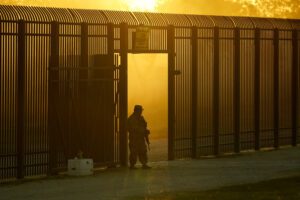
 On Sunday, February 4, a bipartisan group of senators unveiled a compromise bill intended to address border security concerns and to provide further funding for Ukraine’s military defense against Russia.1 In this post, we will examine the immigration-related contents of the compromise legislation and explore different perspectives about the border security bill.
What Is in the Border Security Agreement?
The border security bill includes $20 billion in investments to:
- hire new Border Patrol officials;
- hire employees to process asylum requests;
- provide funding for shelters and services in cities struggling to meet the needs of new immigrants;
- expand detention facilities to hold those who cross the border illegally; and,
- increase screenings for fentanyl and other illicit drugs.2
Additionally, the border security bill would increase the scrutiny of those seeking asylum to screen some applicants out of the process more quickly to preserve resources.3 The goal of many of the provisions connected to the asylum process would be to reduce the wait time from 5-7 years to six months. Over the next five years, the agreement would allow an additional 50,000 immigrant visas each year and would establish faster pathways to permanent status for people from Afghanistan who resettled in the United States.4
FURTHER READING: White House List of Provisions in the Bill
In addition to these provisions, the bill would give the president the authority to close the border if the number of migrant encounters exceeds 4,000 per day over the course of a week, and would automatically close the border if the number of encounters exceeds a daily average of 5,000 during a week or exceeds 8,500 on any single day.5
WATCH: The Associated Press Outlines the Senate Bill
What Are Supporters of the Bill Saying About the Immigration Provisions?
Although this border security bill was developed in a bipartisan manner in the Senate, there is no guarantee that the bill will pass. Advocating for the bill, President Joe Biden said, “It will make our country safer, make our border more secure, treat people fairly and humanely while preserving legal immigration, consistent with our values as a nation.”6
Sen. James Lankford (R-Okla.), who was a lead negotiator on the bill, argued that fellow Republicans who are skeptical about the bill should appreciate that the legislation “clears up a lot of the long-term issues and loopholes that have existed in the asylum law and it gives us an emergency authority that stops the chaos right now on the border.”7
Sen. Kyrsten Sinema (I–Ariz.) was also a lead negotiator on the border security bill. “America is and continues to be a bastion of hope for true asylum seekers,” she said. “But it is not an open door for economic migrants. It has been, as we know, exploited dramatically by cartels in the last four to five years.”8
What Are Opponents of the Bill Saying About the Immigration Provisions?
This bill faces scrutiny both from progressive activists and from conservatives and supporters of former President Donald Trump. For example, Leah Greenberg, co-executive director of Indivisible, a progressive organization, said they oppose “bringing back failed Trump-era immigration policies, and we oppose handing a future Republican president new powers to inflict their cruel agenda on migrants and asylum seekers.”9
“I am still reviewing the text of this proposal, which was constructed under Republican hostage-taking and refusal to fund aid for Ukraine without cruelty toward immigrants,” said Rep. Pramila Jayapal (D-Wash.), a progressive member of the House of Representatives.10
Sen. John Barrasso (R-Wyo.), who is a leader of the Republican Party in the Senate, said, “Joe Biden will never enforce any new law and refuses to use the tools he already has today to end this crisis. I cannot vote for this bill. Americans will turn to the upcoming election to end the border crisis.”11
Former President Trump, the leading Republican candidate for president, also opposes the bill and urged congressional Republicans to not pass the bill. “This is a gift to Democrats, and this, sort of, is a shifting of the worst border in history onto the shoulders of Republicans. That’s really what they want. They want this for the presidential election, so they can now blame the Republicans for the worst border in history.”12
What’s Next?
The bipartisan border security bill already appears to have stalled, as many Republican legislators have said they oppose the bill. “Any consideration of this Senate bill in its current form is a waste of time,” Speaker Mike Johnson (R-La.) said in a joint statement with Republican leaders on Monday. “It is dead on arrival in the House. We encourage the U.S. Senate to reject it.”13
President Biden is continuing to push for the border security bill and will likely campaign on the issue. “Now, all indications are this bill won’t even move forward to the Senate floor,” said President Biden. “Why? A simple reason: Donald Trump. Because Donald Trump thinks it’s bad for him politically, even though it helps the country. He’d rather weaponize the issue than actually solve it.”14
Discussion Questions
- Do you think immigration is a high priority issue for the government to address? Why or why not?
- Which of the provisions in the border security legislation do you support, if any? Which do you oppose?
- Members of Congress have attempted to create compromise bills to solve immigration issues many times since the presidency of George W. Bush. Each effort at major reforms has stalled. Why do you think that immigration is such a challenging issue for legislators to solve?
- What would be your priorities if you were proposing changes to immigration policy?
Related Posts
- Record Numbers of Unaccompanied Minors Are Seeking Asylum in U.S.
- Eliminate Illegal Immigration; Make Immigration Work for the Economy
- Migrant Detention and Congressional Oversight
As always, we encourage you to join the discussion with your comments or questions below.
Close Up is proud to be the nation’s leading nonprofit civic education organization, working with schools and districts across the country since 1971. If you would like to partner with us or learn more about our experiential learning programs, professional development, or curriculum design and consulting, contact us today!
Sources
Featured Image Credit: Eric Gay/AP
[1] Reuters: https://www.reuters.com/world/us/us-senate-unveils-118-billion-bipartisan-bill-tighten-border-security-aid-2024-02-04/#:~:text=WASHINGTON%2C%20Feb%204%20(Reuters),from%20the%20House%20of%20Representatives.
[2] Fox News: https://www.foxnews.com/politics/senate-releases-long-awaited-border-legislation
[3] The White House: https://www.whitehouse.gov/briefing-room/statements-releases/2024/02/04/fact-sheet-biden-harris-administration-calls-on-congress-to-immediately-pass-the-bipartisan-national-security-agreement/
[4] Ibid.
[5] New York Times: https://www.nytimes.com/2024/02/05/us/politics/senate-border-ukraine-deal.html
[6] The White House: https://www.whitehouse.gov/briefing-room/statements-releases/2024/02/04/fact-sheet-biden-harris-administration-calls-on-congress-to-immediately-pass-the-bipartisan-national-security-agreement/
[7] Associated Press: https://apnews.com/article/congress-border-security-ukraine-15e2e3fac2b29b5b4bbe1eae8eb1c924
[8] Ibid.
[9] The Hill: https://thehill.com/homenews/senate/4449866-the-memo-gops-border-bill-outrage-underscores-a-political-shift/
[10] Fox News: https://www.foxnews.com/politics/pramila-jayapal-says-biden-caved-extremist-views-bipartisan-border-deal
[11] New York Times: https://www.nytimes.com/2024/02/06/us/politics/border-republicans-ukraine-bill.html
[12] The Hill: https://thehill.com/homenews/senate/4449600-trump-border-bill-very-bad-lankfords-career/
[13] New York Times: https://www.nytimes.com/2024/02/04/us/politics/senate-border-deal-immigration-ukraine.html
[14] ABC News: https://abcnews.go.com/Politics/biden-blames-trump-border-deal-now-teetering-collapse/story?id=106990958
 Amidst the mosaic of national debates surrounding climate change, economic justice, and public health, there is a growing focus on the intersection of these issues and the design of our communities. The overwhelming majority of U.S. households own at least one vehicle, and the number of vehicles registered in the United States has continued to rise in recent years.1 Some argue that car dependency is a symptom of the design of American cities, others argue that it’s the cause.
 In the weeks since the Hamas terrorist attacks of October 7, Israel has conducted a military campaign with the stated goal of eradicating Hamas as both a military and governing organization.1 The death toll in Gaza currently stands at around 22,000 Palestinians and 170 Israeli soldiers, in addition to the more than 1,200 people Hamas killed on October 7.2 While further negotiations over a second ceasefire are ongoing (as of January 3, 2024), officials in the United States and around the world are also concerned about broader regional and global conflict boiling over.3 Many in the United States share these concerns.4
 As part of our ongoing series centered on the Israel-Hamas conflict, this post will review the U.S. foreign policy decisions.
  This is the first in a series of posts that will explore complex domestic policy, foreign policy, and global issues connected to the Israel-Hamas conflict. In the United States, there has been significant discussion and debate about what to do, both in terms of foreign policy and on the domestic front. In this series, we will examine rising antisemitism and anti-Muslim hate in the U.S., evaluate what the United States could and should do in the Middle East from multiple perspectives, and examine the impact the conflict is having on the United States as it navigates issues in the region and around the world.
 The Hamas Attack Launches
 How has the “American Dream” changed over time? In September, the Sine Institute of Policy and Politics at American University